
The White Lotus Effect: Phuket’s Exclusive Island Tours
Disclosure: To help support our website, some of the links below are affiliate links. This means that if you choose to make a purchase, we will earn a commission at no additional cost to you.
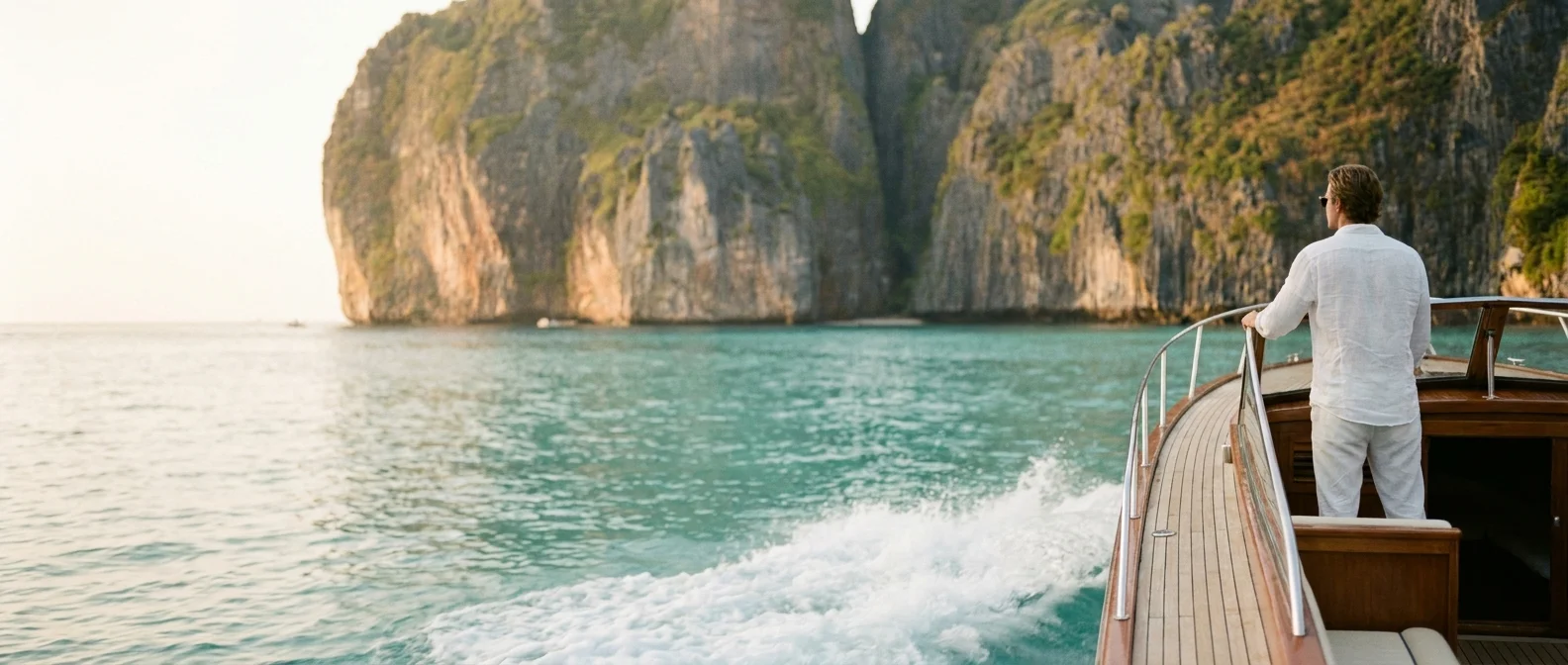
Table Of Contents
- Quick Answer
- The Seasonal Reality: Navigating the Phuket Dry Season Weather
- The Nautical Launchpad: Private Charters vs. Group Tours
- The Elite Itinerary: Similan Islands and Phi Phi Strategy
- Island Hopping Essentials: Protection and Etiquette
- Beyond the Beach: Phuket’s Cultural Zones
- Mistakes First-Timers Make
- Related FAQs
- Closing
The White Lotus Phuket trend has transformed Thailand’s winter travel scene, driving demand for ultra-luxury stays and exclusive marine experiences. For travelers visiting between December 2026 and March 2027, the biggest question is where to find secluded turquoise waters and enjoy them before peak-season crowds arrive. This guide covers the essential details of Phuket island hopping, helping you plan a VIP experience with the right boat charter, island permits, and travel arrangements. You’ll learn how to navigate access requirements for the Similan Islands, choose a suitable vessel for open-water conditions, and explore quieter coastal spots. We also explain how to balance the luxurious aesthetic popularized by the series with the practical realities of Thailand’s busy dry season, including advance bookings, weather conditions, and smart route planning.
Quick Answer
- Best Window: December to March (Northeast Monsoon) offers the calmest seas and lowest humidity (60–70%).
- Expected Conditions: Daytime highs of 31°C–34°C with an intense UV index of 11+; early departures (7:30 AM) are mandatory to beat the heat.
- The Main Friction: National Park permits for the Similan Islands are capped and sell out weeks in advance; saltwater spray poses a high risk to unprotected electronics.
- Booking Note: Private speedboat charters for the “Festive Season” (Dec 20–Jan 5) should be booked 3–6 months out, as prices often double during this window.
| Month | Avg. Temp (Day) | Crowd Level | Best For |
|---|---|---|---|
| December | 31°C | Peak | Festive luxury, calmest west coast seas, Similan openings. |
| January | 32°C | High | Stable weather, clear visibility for snorkeling, peak social scene. |
| February | 33°C | Moderate | Romantic private charters, Chinese New Year festivities. |
| March | 34°C | Moderate | Deep-sea fishing, diving, before the humidity climbs in April. |
White Lotus Thailand: Phuket’s Hidden Resorts.
The Seasonal Reality: Navigating the Phuket Dry Season Weather
The planning window of December to March is Phuket’s “Golden Era,” characterized by the Northeast Monsoon, which brings dry, cooling winds. However, “dry” does not mean cool. Travelers must prepare for a specific atmospheric profile to maintain the luxury experience.
Temperature bands and UV strategy
Daytime highs consistently hit 31°C–34°C. While the humidity is lower than in the summer months, the UV index frequently exceeds 11. To avoid “boat burn,” tours must be paced with a 7:30 AM launch. This Phuket dry season weather provides approximately 11.5 to 12 hours of daylight, with sunset typically occurring between 6:00 PM and 6:30 PM. The intensity of the sun at sea is compounded by the reflection off the white silica sand and the water surface. Wear breathable fabrics like linen or high-grade moisture-wicking synthetics. Avoid heavy cotton, which retains salt and moisture, leading to skin irritation during long boat transits.
The festive pricing pivot
Between December 20 and January 5, Phuket enters the “Festive Season.” This is the peak of the White Lotus effect, where private speedboat charters and high-end villas implement three- to five-night minimums and premium surcharges. Prices for private charters often double during this two-week window. For those seeking the same weather profile without the peak surcharges, the early December shoulder (December 1–15) provides a strategic advantage. Stability in weather is usually established by this point, but the mass-market holiday crowds have not yet arrived. After January 10, prices stabilize at standard high-season rates, which remain in effect through March.
The Nautical Launchpad: Private Charters vs. Group Tours
Choosing the right vessel and pier is the difference between a cramped transit and a VIP excursion. In Phuket, geography dictates your departure point and the quality of your experience.
Phuket private speedboat charter vs. group tour
For the luxury trendseeker, the Phuket private speedboat charter is the only way to control the itinerary and avoid the saturation at Maya Bay. Group tours follow rigid schedules that place hundreds of people at the same snorkeling spots simultaneously. A private charter allows for “reverse itineraries,” where you visit popular spots while the crowds are at lunch.
Speedboats are essential for distance. To reach the Phi Phi Islands or the Similans, you need the velocity of a multi-engine speedboat to maximize your time in the water. Longtail boats are better suited for near-shore “slow travel” to places like Coral Island or Koh Bon. When booking a speedboat, remember the “Speedboat Back” safety rule: sit in the rear third of the vessel. The bow of a speedboat slams hardest against the waves, which can cause significant spine impact. The rear, near the engines, provides the most stable and cushioned ride.
Pier logistics: getting to the water
Most travelers make the mistake of assuming all boats leave from one location. Using the wrong pier can result in a 90-minute cross-island taxi delay. Rassada Pier, located near Phuket Town, is the primary hub for large ferries and catamarans heading to Phi Phi and Krabi. Chalong Pier in the south is the workhorse for speedboats heading to Racha Island and the southern reefs.
For a true luxury experience, Ao Po Grand Marina on the northeast coast is the preferred launchpad for large luxury cruises and explorations of Phang Nga Bay. It features deep-water access and high-end amenities. Royal Phuket Marina is another premium option, offering floating docks that make boarding easy and clean, regardless of the tide. Always verify your pier location 24 hours before departure, as some operators switch locations based on tidal shifts.
7-Day Guanacaste Winter Itinerary: Beach & Jungle.
The Elite Itinerary: Similan Islands and Phi Phi Strategy
The most exclusive destinations in the Andaman Sea require the most rigorous planning, particularly regarding environmental protections and visitor caps.
Similan Island permit booking and logistics
The Similan Islands are strictly seasonal, open only from October 15 to May 15. Because they are a protected National Park, entry is not guaranteed without prior authorization. A Similan Island permit booking must be secured through an authorized operator. There is a strict 14-day booking rule for these permits, and daily visitor caps are enforced to prevent ecological degradation.
When booking Similan Islands tours in December, be prepared for a 12-hour commitment. The journey typically involves a 90-minute drive from Phuket to the piers in Khao Lak, followed by a 75-minute speedboat ride. The water clarity here is the highest in Thailand, often exceeding 30 meters of visibility. However, the National Park authority prohibits staying overnight on the islands, meaning all luxury experiences are day trips only.
The “early bird” Phi Phi circuit
To experience Maya Bay or Pileh Lagoon without hundreds of other tourists, you must arrive by 8:00 AM. This requires a 7:30 AM departure from the Phuket marinas. By 10:30 AM, the “saturation point” is reached as mass-market tours from both Phuket and Krabi converge on the islands.
When comparing the Similan Islands vs. Phi Phi Islands, consider your priorities. Phi Phi offers better snorkeling variety and dramatic limestone cliffs, while the Similans offer superior water clarity and white-sand beaches that rival the Maldives. A private charter to Phi Phi allows you to visit “Monkey Beach” or “Bamboo Island” on your own terms, often finding pockets of silence even during the peak of January.
Island Hopping Essentials: Protection and Etiquette
The marine environment in Thailand is unforgiving to both the body and electronics. Luxury travel requires proactive protection against salt, sun, and local regulations.
Protecting your valuables and electronics
Saltwater spray and sudden tropical squalls are the primary threats to high-end camera gear and smartphones. You must understand how to protect valuables on Phuket boats before you board. A 10L or 20L dry bag is the best dry bag for Thailand island hopping because it provides enough space for a camera, a dry change of clothes, and your passport.
Many travelers ask, do I need a waterproof phone case in Phuket? The answer is yes. Even if your phone is rated as water-resistant, the salt in the Andaman Sea is highly corrosive to charging ports. A waterproof phone case in Phuket with a secure lanyard is mandatory for both spray protection during high-speed transits and for capturing underwater photography while snorkeling. Furthermore, high heat can cause batteries to drain rapidly or phones to shut down. Keep electronics in the shaded areas of the boat and avoid leaving them on the deck.
Environmental compliance: Reef-Safe sunscreen
Thailand has strict bans on sunscreens containing chemicals that damage coral reefs, such as oxybenzone, octinoxate, 4-methylbenzylidene camphor, or butylparaben. Using reef-safe sunscreen in Thailand is not just an ethical choice; it is a legal requirement in National Parks.
Do you need reef-safe sunscreen in Thailand? Yes. National Park rangers have the right to inspect your products and confiscate non-compliant formulas. Beyond the legal aspect, the “boat burn” phenomenon is real. The white sand reflects UV rays upward, meaning you can burn even under a boat’s canopy. Use mineral-based sunscreens containing zinc oxide or titanium dioxide, which provide a physical barrier against the sun and do not harm the marine ecosystem.
Where to Stay for Sapporo Snow Festival 2027.
Beyond the Beach: Phuket’s Cultural Zones
To round out the “White Lotus” experience, travelers should integrate inland culture with their maritime schedule. Phuket is not a monolithic destination; it is a collection of distinct zones with varying atmospheres.
Zone-by-zone breakdown
Phuket Old Town is the hub for Sino-Portuguese architecture and the best culinary experiences on the island. It is the place to find “Moo Hong,” a slow-braised pork belly that is a staple of Phuket’s Peranakan culture. A two-night stay in a restored heritage boutique hotel here provides a necessary contrast to the beach resorts. Visit the Sunday Walking Street (Lard Yai) on Thalang Road, but arrive by 5:00 PM to beat the heaviest crowds.
Rawai, located at the southern tip of the island, is the “Sea Gypsy” hub. It is less polished than the northern beaches but offers the most authentic seafood experience. You can buy fresh snapper or tiger prawns at the market and have them cooked by the restaurants across the street. This is also the best place to hire a private longtail for a short trip to Koh Bon.
Bang Tao and the Laguna area represent the upscale enclave of the island. This zone is home to high-end beach clubs and the most refined dining options. For a local treat, look for the street-side Roti stalls near Boat Avenue in the evenings. When navigating the island, avoid the “Jet Ski Scam” in Patong. This involves vendors claiming pre-existing damage to the jet ski was caused by the renter. Stick to reputable beach clubs or hotel-managed water sports.
Mistakes First-Timers Make
1. Ignoring the National Park cash requirement: Many travelers arrive at the pier with only credit cards, only to find the 400 THB entry fee is cash-only. Always carry 1,000 THB per person in small notes for a day on the water to cover fees, tips, and snacks.
2. Sitting in the speedboat bow: While it looks like the best spot for photos, the front of the boat slams hardest against waves. If you have any back issues or prefer a smoother ride, sit in the rear third of the vessel where the engine weight stabilizes the movement.
3. The “Phuket Town” beach myth: Booking a hotel in Old Town expecting a beach view is a common error. Old Town is a 30-minute drive from the coast. Use it for food and culture for a night or two, then move to Bang Tao or Rawai for direct water access.
4. Haggling with Patong Tuk-Tuks: Expecting “Bangkok prices” for short rides will lead to frustration. Phuket Tuk-Tuks operate on a semi-fixed, higher-priced system. Use the Grab app to see the fair price first, or use the Phuket Smart Bus for a 100 THB flat rate along the west coast.
The Ultimate Philadelphia Autumn Weekend Itinerary.
Related FAQs
Focus on wet-to-dry transitions. Pack a 10L dry bag, reef-safe sunscreen, a waterproof phone case with a lanyard, and a change of light linen clothes. Don’t forget 400 THB in cash for National Park fees, as these are often not included in the charter price.
For the December to January peak, book private charters two to three months out. Similan Island permits specifically require a minimum of 14 days’ notice due to strict daily visitor caps enforced by the Department of National Parks.
It is the optimal time. The Northeast Monsoon ensures calm seas on the west coast and lower humidity. However, be prepared for “Festive Season” price surges between December 20 and January 5, when many operators double their rates.
Yes. Thailand has legally banned sunscreens containing oxybenzone, octinoxate, 4-methylbenzylidene camphor, or butylparaben to protect coral health. National Park rangers may inspect your gear and confiscate non-compliant products at the pier or on the islands.
Use a dedicated waterproof phone pouch with a secure neck lanyard. This prevents the phone from being dropped overboard during high-speed transits and protects the charging port from corrosive saltwater spray, which can damage the electronics even without full submersion.
Longtails are traditional wooden boats best for short, scenic trips to nearby islands like Koh Bon or Coral Island. Speedboats are modern, faster, and necessary for reaching distant sites like Phi Phi or the Similans within a single day.
Closing
With your private charter secured and your dry bag packed, the final step is to coordinate your arrival at the correct pier. Ensure your transport is booked for a 7:30 AM launch to truly capture the “White Lotus” serenity of the Andaman Sea. By avoiding the midday crowds and respecting the local environmental regulations, you can execute a high-end itinerary that remains both exclusive and sustainable. Verify all pier locations and permit statuses locally before travel to ensure a friction-free experience in the Thai islands.

The Shetland Islands in late January are not for the faint of heart. At Scotland’s rugged northern edge, long winter nights, freezing temperatures, and powerful North Sea winds create a dramatic setting for one of Europe’s most remarkable cultural celebrations. Yet, travelers who brave these challenging conditions can experience an unforgettable spectacle filled with local […]
The White Lotus Phuket trend has transformed Thailand’s winter travel scene, driving demand for ultra-luxury stays and exclusive marine experiences. For travelers visiting between December 2026 and March 2027, the biggest question is where to find secluded turquoise waters and enjoy them before peak-season crowds arrive. This guide covers the essential details of Phuket island […]

The Roaring Forties winds shape Patagonia’s dramatic landscape and can bring four seasons of weather in a single afternoon. For travelers planning a trip between December 2026 and March 2027, the biggest challenge isn’t simply choosing what to wear; it’s preparing for powerful gusts, sudden sleet, and rapidly changing temperatures. This **Patagonia summer packing list** […]