
Patagonia Summer Packing List: Trekking Guide
Disclosure: To help support our website, some of the links below are affiliate links. This means that if you choose to make a purchase, we will earn a commission at no additional cost to you.
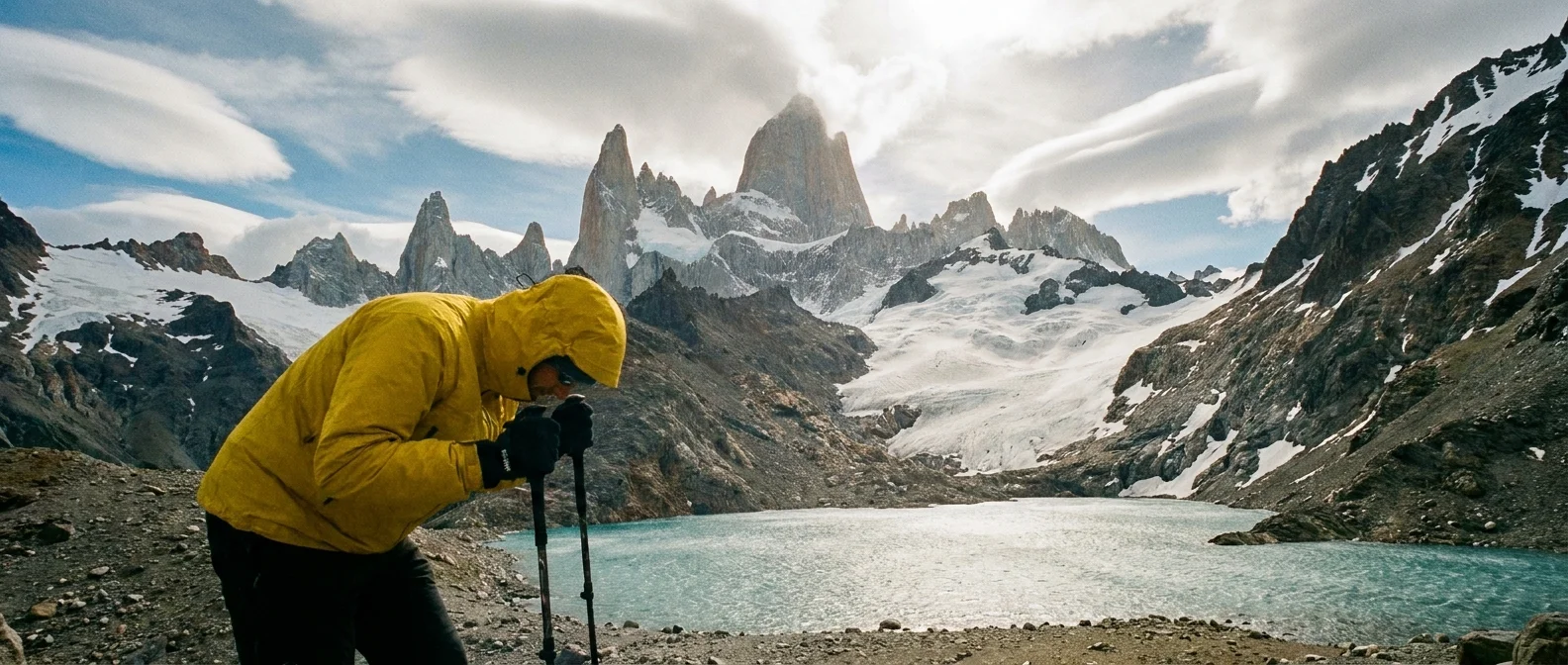
Table Of Contents
- Quick Answer
- Patagonia Summer Trekking Comparison Table
- The Technical Layering System for Extreme Wind
- Footwear and Stability: Navigating Scree and Silt
- Zone-by-Zone Logistics: El Chaltén to Ushuaia
- Transit Mechanics and Money Strategy
- Timing and Crowd Strategy for Summer
- Mistakes First-Timers Make
- Related FAQs
- Closing
The Roaring Forties winds shape Patagonia’s dramatic landscape and can bring four seasons of weather in a single afternoon. For travelers planning a trip between December 2026 and March 2027, the biggest challenge isn’t simply choosing what to wear; it’s preparing for powerful gusts, sudden sleet, and rapidly changing temperatures. This **Patagonia summer packing list** goes beyond basic hiking essentials to help you prepare for the demanding conditions of the Southern Andes, from the intense wind chill of El Chaltén to the glacial terrain of Los Glaciares National Park.
Patagonia’s unpredictable weather demands a smart approach to outdoor clothing and equipment. A sunny morning can quickly turn into freezing rain, while strong winds can make even moderate temperatures feel significantly colder. That’s why hikers should prioritize windproof outer layers, waterproof jackets, insulating mid-layers, and moisture-wicking base layers. Choosing the right combination will help you stay comfortable while exploring exposed mountain trails and remote landscapes.
Your packing strategy should also account for the physical demands of Patagonia’s granite trails, uneven terrain, and glacial environments. Reliable hiking boots, trekking poles, protective accessories, and a weather-resistant backpack can make long-distance trekking safer and more manageable. You should also prepare for intense solar radiation, sudden temperature drops, and limited access to supplies in remote hiking areas.
Whether you’re exploring the famous trails around El Chaltén or visiting the spectacular landscapes of Los Glaciares National Park, this guide will help you build a practical, modular packing system. With the right gear and preparation, you can adapt quickly to changing weather and enjoy Patagonia’s summer trekking season with greater comfort and confidence.
Quick Answer
- Best Trekking Window: Early December or March: these periods offer the best balance of weather stability and lower crowds.
- Expected Conditions: Daytime 13°C to 20°C (55°F to 68°F); nighttime lows 3°C to 7°C; frequent 100km/h wind gusts.
- The Main Friction: The Patagonian Blast: wind chill can drop perceived temperatures by 10°C instantly.
- Booking Note: Book El Calafate to El Chaltén buses and Bariloche refugios 2 to 3 months in advance for January travel.
Patagonia Summer Trekking Comparison Table
| Month | Avg Daytime Temp | Crowd Level | Best For |
|---|---|---|---|
| December | 15°C (59°F) | Moderate | Longest daylight (17 hours) and wildflowers. |
| January | 18°C (64°F) | Very High | Peak warmth: requires advanced bookings for everything. |
| February | 17°C (63°F) | High | Stable weather: ideal for multi-day hut-to-hut treks. |
| March | 14°C (57°F) | Moderate | Autumn colors and significantly lower wind speeds. |
The Technical Layering System for Extreme Wind
The most dangerous mistake a first-timer makes is assuming summer means light. The Patagonian climate is dictated by the unimpeded airflow from the Pacific Ocean, which accelerates as it hits the vertical walls of the Andes. This section breaks down the layering system for Patagonia’s extreme wind to handle the four seasons in one-day reality.
The hardshell: your primary defense
A standard city raincoat fails in 100km/h gusts because the fabric lacks the structural integrity to remain taut. When wind forces the fabric against your mid-layers, it creates a thermal bridge that pulls heat away from your body. The best windproof jacket for Patagonia summer must be a dedicated technical hardshell. It requires a helmet-compatible hood with a stiff, laminated brim. This feature prevents the wind from collapsing the hood over your eyes or against your face.
The jacket must also feature high breathability ratings. During the 1,000m ascent to Laguna de los Tres, your body generates significant heat. If the jacket does not vent moisture effectively, you will become damp from sweat. Once you reach the exposed ridge and the wind hits, that moisture will flash-freeze, leading to rapid heat loss. Look for jackets with pit zips and adjustable cuffs that can be sealed tight over gloves. The fabric should have a minimum 20,000mm waterproof rating and a high CFM (cubic feet per minute) wind resistance.
Mid-layers and the puffy necessity
Even in January, temperatures at alpine campsites like Campamento Poincenot hit 0°C (32°F). A common error is to rely solely on fleeces. While a fleece is excellent for active movement, it offers zero protection once you stop. A down or synthetic puffy jacket is one of the Patagonia multi-day trek essentials. This layer is for static periods: lunch breaks at the base of Fitz Roy, photography sessions at the Perito Moreno Glacier, or evenings at a campsite.
Synthetic insulation is often preferred for Patagonia because it retains its loft and warmth even if it gets damp from humidity or light spray. If you choose down, ensure it has a hydrophobic treatment. This layer should be sized to fit comfortably over your base and mid-layers but under your hardshell. The goal is to trap a pocket of dead air that the wind cannot penetrate. Calling this a summer trip is a misnomer that leads to hypothermia if you do not carry a high-loft insulation layer in your daypack at all times.
Base layers and moisture management
The transition from high-exertion hiking to cold wind-chill requires a base layer that dries almost instantly. Merino wool is the preferred material over synthetics for multi-day treks in El Chaltén. It manages odor for several days of continuous wear and provides superior thermal regulation. Unlike synthetics, merino wool feels warm even when slightly damp. A mid-weight (200gsm) long-sleeve top is the most versatile choice. It provides sun protection on exposed ridges and serves as a warm sleep layer in mountain huts or tents. Avoid cotton entirely: it absorbs moisture, stays heavy, and accelerates cooling.
Footwear and Stability: Navigating Scree and Silt
The terrain in Los Glaciares National Park is notoriously abrasive. Granite dust, loose scree, and boggy peat require specific footwear choices. This section addresses the summer hiking boots Patagonia requirements and the mechanical necessity of poles.
Boots vs. shoes: the waterproof debate
The debate between trail runners and boots is settled by the specific geography of the Southern Andes. Glacial silt is a fine, abrasive sand that can wear through lightweight mesh in a matter of days. Furthermore, trails in the Rio Eléctrico valley or the approach to Ushuaia’s Laguna Esmeralda involve deep peat bogs and stream crossings. High-gusseted tongues are required to keep out fine glacial sand and water.
Leather or membrane-lined boots are essential for the boggy terrain of Tierra del Fuego and the wet trails of Bariloche. While trail runners are comfortable for the well-maintained paths near the El Chaltén townsite, they lack the lateral stability needed when a 100km/h gust hits you on a narrow ridge. A mid-cut or high-cut boot provides the necessary leverage to stay upright. Ensure your boots are broken in at least 50km before arrival to avoid blisters on the 20km+ daily treks common in this region.
Stability on the big three trails
Many hikers ask: do I need trekking poles in Patagonia? The answer is yes. The final ascent to Laguna de los Tres involves a 400m climb over 1km on loose, shifting scree. The descent is equally taxing on the knee joints. Trekking poles provide a third and fourth leg during high-wind events. When gusts threaten to knock you off balance, poles provide the necessary points of contact to remain stable.
Use carbide tips for traction on the hard granite surfaces. In areas with soft peat or deep mud, use mud baskets to prevent the poles from sinking. Collapsible poles are preferred as they can be stowed on your pack during the flat approach sections of the Fitz Roy or Cerro Torre trails. They are not merely an accessory: they are a safety tool for navigating the steep, eroded paths of the national park.
Zone-by-Zone Logistics: El Chaltén to Ushuaia
Packing requirements shift slightly depending on which Patagonian hub you prioritize. Each region has a distinct microclimate and infrastructure.
El Chaltén: The trekking hub
El Chaltén is unique because the major trailheads for Fitz Roy and Cerro Torre start directly from the edge of the village. You do not need heavy transit gear or specialized mountain transport to access the park. This allows you to leave your main luggage at your hostel and carry only a technical daypack.
The El Chaltén trekking gear list must include a waste kit. The national park has a strict Leave No Trace policy: you must carry out all toilet paper and waste. Another logistical advantage is the water. You only need to carry a 1L bottle because the moving glacial streams are potable. Most hikers refill directly from the streams, though a lightweight filter is an option for those with sensitive systems. Avoid taking water from stagnant ponds or areas near high-traffic campsites.
El Calafate and Perito Moreno
El Calafate serves as the gateway to the Perito Moreno Glacier. The Los Glaciares National Park weather here is often slightly warmer than in El Chaltén, but the glacier creates its own microclimate. The steel boardwalk system is accessible and well-maintained, but the wind coming off the ice field is piercing.
You need UV-rated neck gaiters and polarized sunglasses. The ozone layer is thinner over the southern tip of South America, and the white surface of the glacier reflects an immense amount of UV radiation. Sunburn can occur in less than 20 minutes even on overcast days. Polarized lenses are mandatory to prevent snow blindness and to see the deep blue hues within the glacial crevasses.
Bariloche and Ushuaia variations
In the northern Lake District near Bariloche, the “Refugio” culture is the primary draw. If you are trekking from Refugio Frey to Refugio Jakob, you need a lightweight sleeping bag liner. The huts provide blankets and mattresses, but a personal liner is required for hygiene. The terrain here is more forested but still features exposed alpine ridges.
Ushuaia, the southernmost city, presents a different challenge. The ground is often saturated with water due to the “turbales” (peat bogs). Even in the height of summer, the trails to Glacier Martial or Laguna Esmeralda are muddy. This environment requires higher-cut waterproof boots and gaiters to prevent mud from entering the top of your footwear.
Transit Mechanics and Money Strategy
Navigating the Blue Dollar and the bus networks is as technical as the trekking itself. Argentina’s economy requires a specific approach to payments.
The MEP rate and cash essentials
The financial landscape for travelers in Argentina has changed. Foreign credit and debit cards now receive the MEP rate (Mercado Electrónico de Pagos). This rate is close to the unofficial Blue Dollar rate, making card use much more practical than in previous years. Most restaurants and hotels in El Calafate and Bariloche accept Visa and Mastercard.
However, El Chaltén remains an exception. Internet outages are frequent, and the town’s single ATM often runs out of cash or refuses foreign cards. You must carry a significant amount of Argentine Pesos for small purchases, park fees, and restaurants that may have their systems down. Use Cuevas (informal exchange houses) in El Calafate or Buenos Aires to exchange USD for Pesos if you need physical cash. Ensure your USD bills are pristine: any tears or marks will result in a lower exchange rate or outright rejection.
Moving between hubs: buses and SUBE
The primary transit link is the 3-hour bus from El Calafate to El Chaltén. Operators like Taqsa, Chaltén Travel, and Caltur run this route multiple times daily. Tickets cost between $30 and $45 USD. For January travel, you must book these 2 months in advance as they sell out.
In Bariloche and Ushuaia, the local bus systems require a SUBE card. This is a rechargeable smart card used across Argentina. You cannot pay the driver with cash. Buy a card at a “Kiosko” (convenience store) upon arrival and load it with funds. In El Chaltén, the town is small enough that no local transit is required: everything is reachable on foot.
Timing and Crowd Strategy for Summer
How you pack your day-of bag and when you leave your accommodation determines the quality of your experience.
The 06:00 rule for Fitz Roy
To experience the granite spires without the crowds, you must be at the trailhead by 06:00. This timing ensures you reach the steep final ascent before the 11:00 wind surge. The wind typically intensifies in the afternoon as the land warms up. Packing a headlamp is mandatory for these early starts.
Starting early also allows you to avoid the 13:00 rush. This is when day-trippers from El Calafate arrive in mass on tour buses. By the time they reach the first viewpoints, you will already be descending. Your daypack should contain your hardshell and puffy jacket even if the morning feels warm: the temperature at the lake (Laguna de los Tres) is significantly lower than in the valley.
Sunset at Perito Moreno
Most tourists visit the Perito Moreno Glacier in the morning. To see it in a different light and with fewer people, take the 15:00 bus from El Calafate. The park remains open until 20:00 in the summer. The late afternoon sun hits the face of the glacier, creating better conditions for photography.
Pack extra batteries or a power bank. The cold air near the ice mass drains electronics quickly. Keep your phone or camera batteries in an internal pocket close to your body heat when not in use. The evening temperature drop at the glacier is sharp, so ensure your mid-layers are easily accessible in your bag.
Mistakes First-Timers Make
- The Mistake: Packing only summer clothes.
- The Consequence: Hypothermia during a sudden sleet storm at Laguna de los Tres.
- The Fix: Always carry a down mid-layer and hardshell, even if the town is 20°C.
- The Mistake: Carrying 3L+ of water.
- The Consequence: Unnecessary weight (3kg+) on steep 1,000m climbs.
- The Fix: Carry 1L and refill at moving glacial streams: the water is among the cleanest on earth.
- The Mistake: Assuming the W Trek is in Argentina.
- The Consequence: Arriving in El Calafate without a Chilean visa or the 5-hour bus transfer to Puerto Natales.
- The Fix: Distinguish between El Chaltén (Argentina) and Torres del Paine (Chile) during the planning phase.
Related FAQs
While daytime highs reach 20°C (68°F), the wind chill can make it feel like 5°C (41°F). Nighttime in alpine areas frequently drops to freezing (0°C/32°F). The key is preparing for a 15-degree temperature swing in a single hour.
No, standard trails are clear of ice. You only need crampons for guided glacier walks (like the Big Ice trek), and these are provided by the tour operators in El Calafate. Standard hiking boots are sufficient for all main trails in El Chaltén.
Yes, the moving glacial water in the national park is potable. Most hikers drink directly from the source, though a lightweight filter can be used for peace of mind if you have a sensitive stomach or are near a campsite.
No. El Chaltén is unique because all world-class trails start from the village. You can stay in a hostel or hotel and complete the Big Three (Fitz Roy, Cerro Torre, Loma del Pliegue Tumbado) as day hikes, returning to town every evening.
It is the unofficial exchange rate. However, foreign tourists using international credit cards now automatically receive the MEP rate, which is very close to the Blue Dollar, making card use convenient and safe for most purchases in larger towns.
Yes. The final ascent to Fitz Roy is a steep, loose scree slope. Poles are essential for stability in high winds and to protect your knees during the long, jarring descents back to town. They are a critical safety item in this terrain.
Closing
With your technical layering system and transit strategy set, the final step is to monitor the local Windguru forecasts for El Chaltén as your departure date approaches. Your next action should be to secure your El Calafate to El Chaltén bus tickets to ensure you are not stranded during the peak January surge. The landscape of the Southern Andes rewards those who respect its power with the proper gear. By building your kit around the wind and the silt, you move from merely surviving the elements to observing them with the clarity they deserve.
The Roaring Forties winds shape Patagonia’s dramatic landscape and can bring four seasons of weather in a single afternoon. For travelers planning a trip between December 2026 and March 2027, the biggest challenge isn’t simply choosing what to wear; it’s preparing for powerful gusts, sudden sleet, and rapidly changing temperatures. This **Patagonia summer packing list** […]
The post-holiday travel scene has changed, and by 2027, experienced travelers increasingly seek peaceful escapes instead of the high-energy beach clubs that dominate early January in Tulum. Many now prefer secluded eco-resorts, quieter coastal retreats, and nature-focused experiences deep within the surrounding biosphere. However, one important question remains: *Can you still experience the old, off-grid […]
The Dior Summer 27 collection at Paris Fashion Week has redefined modern Parisian elegance, capturing global attention with its distinctive designs, sophisticated silhouettes, and fresh interpretation of luxury fashion. The collection has also sparked growing interest in high-fashion travel, particularly among visitors planning trips to Paris between April and June 2027. For luxury travelers, experiencing […]