
7-Day Guanacaste Itinerary: Eco-Luxury Escape
Disclosure: To help support our website, some of the links below are affiliate links. This means that if you choose to make a purchase, we will earn a commission at no additional cost to you.
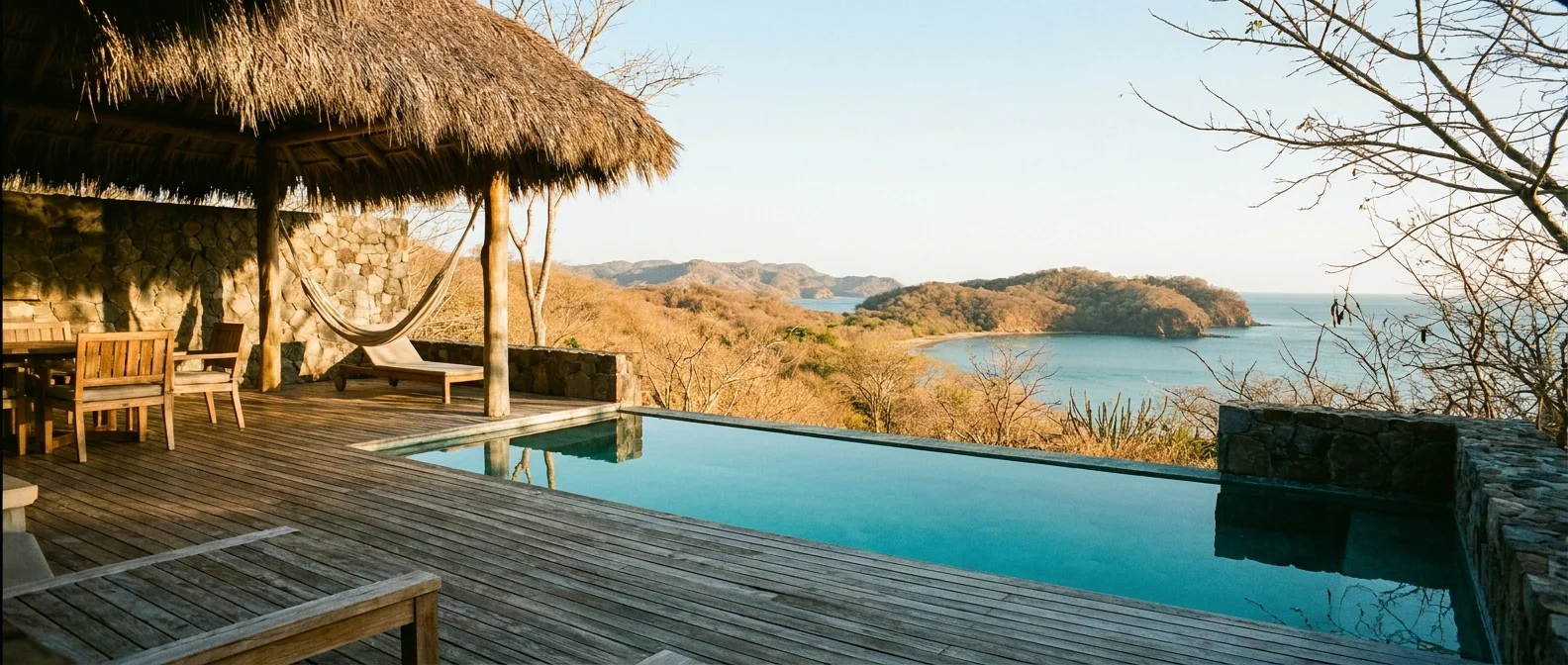
Table Of Contents
- Quick answer
- Guanacaste Seasonal Planning at-a-Glance (Jan–Apr)
- The Logistics of Luxury: Transit and Booking Strategy
- The 7-day itinerary: from volcanic peaks to private coves
- Seasonal Realities: The Guanacaste Dry Season Guide
- Regional Deep Dive: Peninsula Papagayo vs. Tamarindo
- Mistakes first-timers make
- Related FAQs
- Closing
As the North American winter approaches, Costa Rica’s northwest enters a critical booking period known as the “Dry Season Inventory Lock.” For affluent travelers planning a Guanacaste 7-day itinerary, securing the right accommodation becomes a priority, as the region’s most exclusive boutique eco-lodges, many featuring fewer than 20 villas, can reach 80 percent occupancy for the January to April travel window by October. Waiting too long can limit your choices, increase accommodation costs, and make it harder to secure the most desirable properties.
The central question for eco-conscious visitors is how to balance thrilling volcanic adventures, immersive wildlife encounters, and scenic nature excursions with the refined seclusion of Guanacaste’s beautiful coastline. This guide provides a practical logistical blueprint to help you plan each day, choose distinctive eco-luxury stays, and make the most of the region’s Tropical Dry Forest during its prime season.
From exploring volcanic landscapes and discovering local culture to relaxing on pristine beaches and enjoying peaceful coastal retreats, you’ll learn how to organize a memorable journey while avoiding unnecessary travel stress. By planning, you can secure better accommodation options, manage your itinerary efficiently, and experience Guanacaste’s natural beauty before festive price increases and limited availability affect your travel plans.
Quick answer
- The best window: January to March offers guaranteed sun and the Papagayo Winds that keep coastal heat manageable.
- The main friction: The “Dust Season” and unpaved roads require a high-clearance 4×4 vehicle, even for luxury routes.
- Booking lead time: Secure Guanacaste eco-luxury lodges at least three to five months in advance for the January to April season.
- The SJO trap: Always fly into LIR (Liberia): flying into San José (SJO) adds a grueling five-hour drive to your seven-day trip.
Guanacaste Seasonal Planning at-a-Glance (Jan–Apr)
| Month | Avg daytime temp | Crowd level | Best for |
|---|---|---|---|
| January | 32°C (90°F) | Peak | Post-holiday energy, lush-to-dry transition, sunsets. |
| February | 34°C (93°F) | High | Strongest Papagayo Winds, ideal for sailing. |
| March | 35°C (95°F) | High | Deep dry season, best wildlife spotting at watering holes. |
| April | 36°C (97°F) | Extreme (Easter) | Hottest month: Semana Santa brings maximum local crowds. |
The Logistics of Luxury: Transit and Booking Strategy
The most critical logistical decision for a Guanacaste 7-day itinerary happens at the flight booking stage. Daniel Oduber Quirós International Airport (LIR) in Liberia is the only logical entry point. While San José (SJO) often shows lower fare prices, the transit time to the Guanacaste coast is roughly five hours, involving heavy truck traffic on Route 1. LIR, by contrast, is situated 45 to 75 minutes from the major luxury hubs of Peninsula Papagayo and Las Catalinas.
Upon arrival, a high-clearance 4×4 vehicle is a requirement. Even if your primary destination is a paved resort enclave, the secondary roads leading to “barefoot luxury” spots like Nosara or the cliffside lodges of the Nicoya Peninsula remain unpaved. During the dry season, these roads develop “washboard” ripples that can damage a standard sedan. Expect to pay between 600 USD and 1,200 USD for a weekly rental of a late-model SUV.
When you book, be aware of the mandatory Third Party Liability (TPL) insurance. This is a legal requirement in Costa Rica and is rarely included in the initial quotes provided by international booking sites. This can add 20 USD to 40 USD per day to your rental cost. To avoid “sticker shock” at the counter, request an “all-inclusive” quote directly from local providers like Adobe or Vamos.
Knowing how to book Guanacaste eco lodges requires a shift in strategy. Many of the most exclusive properties, such as those integrated into the forest canopy or perched on private coves, do not list their full inventory on major travel aggregators. These boutique operations prefer direct inquiries to ensure guests understand the “eco” nature of the property, which may include open-air living spaces or limited air conditioning. For travel between January and April, direct outreach four months in advance is the standard for securing specific villa orientations or private plunge pool units. This is the period of Guanacaste adventure and travel when the most desirable rooms are removed from the market by repeat visitors.
The 7-day itinerary: from volcanic peaks to private coves
Days 1-3: the volcanic gateway (Curubandé)
After collecting your 4×4 at LIR, drive 35 minutes northeast toward Curubandé, the gateway to Rincón de la Vieja National Park. This region offers a stark contrast to the coast, characterized by geothermal activity and primary forest.
On Day 2, implement the 7:45 AM arrival rule for the Las Pailas sector of the park. The gates open at 8:00 AM, and by 11:00 AM, the volcanic soil absorbs enough solar radiation to make the 3.5-kilometer loop trail uncomfortable. This trail features boiling mud pots and fumaroles. After the hike, move to the La Leona waterfall. Accessing the turquoise waters of the canyon requires a guided trek through the Blanco River: verify locally that your guide is certified. For lunch, stop at a local “soda” (a small, family-run eatery) for Olla de Carne, a traditional beef and tuber stew that provides the necessary salt and hydration after a morning in the heat.
Days 4-5: Peninsula Papagayo seclusion
Transition from the highlands to the coast. Peninsula Papagayo is a 1,400-acre private enclave that represents the peak of Peninsula Papagayo luxury resorts. The contrast here is intentional: the roads are perfectly paved, and the environment is manicured.
Spend these days utilizing the Prieta Beach Club or exploring the rugged coastline by boat. The “Chilled Lobster Ceviche” ritual at the beach clubs is a staple of the midday heat. While the Four Seasons and Andaz offer world-class amenities, the real value of the peninsula lies in its access to the Bahia Culebra. Charter a private catamaran for a half-day tour to find “secret” beaches like Playa Huevos, which are only accessible by water. The water here is calmer than the open Pacific, making it the best location for paddleboarding or snorkeling before the afternoon winds pick up.
Days 6-7: the wellness pivot (Nosara vs. Las Catalinas)
For the final two days, choose between two distinct versions of luxury.
Nosara is the destination for “barefoot luxury.” It is a surf-centric town where the jungle meets the shore. The roads are dusty, and the vibe is unpretentious, but the eco-lodges here are some of the most expensive in the country. The focus is on yoga, organic dining, and the 5:00 PM “Sunset Ritual” at Playa Guiones, where the entire community gathers at the water’s edge.
Alternatively, Las Catalinas offers a Mediterranean-style, car-free village experience. It is situated on Playa Danta and is designed for travelers who prefer walkability and architecture. The town is surrounded by 40 kilometers of hiking and mountain biking trails. The 5:00 PM hard-stop event here is usually a sundowner at the beach club or a rooftop terrace overlooking the Pitahayas Islands. Both locations require a 4×4 for the final approach, particularly the coastal road to Nosar, which may still involve small river crossings even in the dry season.
Seasonal Realities: The Guanacaste Dry Season Guide
The January to April window is known locally as Verano (Summer), but it is more accurately described as the Tropical Dry Forest gold season. This is the Guanacaste dry season guide to managing the environment.
The most prominent feature of this season is the “Dust Season” or Calle de Tierra. As the rains stop, the unpaved secondary roads turn into fine white powder. When a vehicle passes, this dust hangs in the air for several minutes. If you are driving a 4×4 with the windows down or riding in an open-air shuttle, a lightweight neck gaiter is necessary to protect your lungs and face.
The Papagayo Winds are another seasonal factor. From January through March, powerful trade winds blow from the northeast, sometimes reaching gusts of 50 miles per hour. While these winds provide a welcome cooling effect, they can make boat departures from north-facing beaches difficult. If the winds are high, Playa Hermosa and Playa Panama are better choices for swimming, as they are geographically shielded by the surrounding hills.
The 10:30 AM Rule is the most important health consideration. The UV index in Guanacaste frequently hits 11 or 12 during the Costa Rica winter sun peak. High-intensity activities, such as hiking the volcanic ridges or long beach walks, must be completed by mid-morning. Between 11:00 AM and 3:00 PM, the temperature often reaches 36°C (97°F). This is the time for the “luxury siesta” or spa treatments.
Finally, manage your expectations regarding the “green” jungle. Guanacaste is a dry forest, not a rainforest. By March, many trees lose their leaves to conserve water, and the terrain turns a golden brown. This is a unique ecological state that allows for easier wildlife spotting, as monkeys and iguanas congregate around the remaining permanent water sources.
Regional Deep Dive: Peninsula Papagayo vs. Tamarindo
Understanding the “Vibe Shift” between Guanacaste’s hubs is essential for a successful Guanacaste 7-day itinerary.
Tamarindo is a high-density, social surf town. It is the center of the region’s nightlife and commercial activity. It is vibrant and convenient but lacks the seclusion many eco-luxury travelers seek. If you want a wide selection of international restaurants and a social atmosphere, Tamarindo is the choice. However, it is also the site of the most significant “smash and grab” vehicle thefts, so security awareness must be higher here.
In contrast, Peninsula Papagayo and Las Catalinas are gated or restricted-access environments. They offer the best eco-luxury resorts in Guanacaste for those prioritizing privacy. In these enclaves, you will find jungle-integrated villas that use sustainable cooling systems and cliffside suites that prioritize the sound of the ocean over social proximity.
Regarding dining and etiquette, prices on menus typically do not include the 13 percent IVA (Value Added Tax) or the 10 percent servicio (service charge). Check the bottom of the menu: if it says “Precios no incluyen impuestos,” expect an additional 23 percent on your final bill. When interacting with locals, the phrase “Mucho gusto” is the standard response to “Gracias,” carrying more weight and politeness than the simpler “De nada.”
Mistakes first-timers make
The most common error is trusting GPS time estimates. While a distance might only be 40 kilometers, the “Dust Season” visibility and the “washboard” state of unpaved roads mean that the drive could take two hours. Waze is the preferred navigation app in Costa Rica, but even it cannot account for a sudden river rise or a slow-moving cattle drive on a secondary road.
The “SJO Savings Trap” is another frequent mistake. Travelers see a flight to San José that is 150 USD cheaper than the flight to Liberia and book it. Between the fuel, the 4×4 rental day rate, and the loss of nearly a full day of vacation time in traffic, the “savings” evaporate instantly. Your time in Guanacaste is the most expensive commodity: do not waste it on the Inter-American Highway.
The Guanacaste, Costa Rica travel advisory regarding “smash and grab” thefts is real. Never leave bags, passports, or electronics in your rental car, even if it is locked and you are only stepping away for a five-minute photo at a scenic overlook. These thefts are opportunistic and occur in seconds.
Finally, check the calendar for Monday. Rincón de la Vieja National Park is closed on Mondays. Many travelers plan their entire inland excursion for a Monday, only to arrive at a locked gate. Always verify park hours locally before departing your lodge.
Related FAQs
Expect daytime temperatures between 32°C and 34°C (90°F–93°F). The heat is dry, which makes it more tolerable than the humid Caribbean coast, but the UV index is extremely high. The Papagayo winds provide a cooling effect, but they also mask the sun’s intensity, leading to frequent sunburns for the unwary.
Yes. While the main highway from Liberia to Tamarindo is paved, the access roads to the best eco-luxury lodges, secluded beaches, and the town of Nosara are not. A 4×2 vehicle lacks the clearance to handle the deep ruts and dust-filled potholes that characterize the dry season.
The dry season runs from December through April. During this time, rainfall is almost non-existent. The landscape transitions from lush green to a golden, deciduous state. This is the best time for travelers who want guaranteed sun and lower humidity.
Playa Hermosa and Playa Panama in the north are the best for swimming. They are located within the Bahia Culebra, which protects them from the large Pacific swells that attract surfers to places like Tamarindo or Nosara.
There are significantly fewer mosquitoes than in the “Green Season” (May–November). However, they remain active at dusk, particularly near estuaries or mangroves. A DEET-free repellent is usually sufficient for the dry season.
For the peak January to April window, you should book three to five months in advance. The most exclusive boutique properties have very limited inventory and often sell out by October.
Closing
One final action: check the 2027 Easter (Semana Santa) dates before finalizing your flights. If your seven-day window overlaps with this week, the region will experience its maximum capacity of both international and local travelers. During this week, traffic on the coastal roads doubles and restaurant availability vanishes. If you find your dates align with the holiday, double your budget and triple your patience, or pivot your dates by one week to reclaim the serene “Pura Vida” atmosphere that Guanacaste is known for.

As the first frost settles over the Danube, the “First Light” window for 2026 holiday planning officially opens. For travelers seeking the quintessential European Advent experience, finding the right Vienna Christmas Market Hotels is just as important as choosing which market to visit or where to enjoy the best Glühwein. Booking early helps you secure […]
The decision to escape the Northern Hemisphere winter for the high sun and high value of the South African summer is a strategic one. From January to March 2027, the city enters its golden window, offering consistent heat and a favorable exchange rate for international arrivals. However, the logistical reality of the city requires more […]
As the North American winter approaches, Costa Rica’s northwest enters a critical booking period known as the “Dry Season Inventory Lock.” For affluent travelers planning a Guanacaste 7-day itinerary, securing the right accommodation becomes a priority, as the region’s most exclusive boutique eco-lodges, many featuring fewer than 20 villas, can reach 80 percent occupancy for […]