
Stargazing in Atacama Desert Chile: Observatory Tickets, Logistics & Altitude Tips
Disclosure: To help support our website, some of the links below are affiliate links. This means that if you choose to make a purchase, we will earn a commission at no additional cost to you.
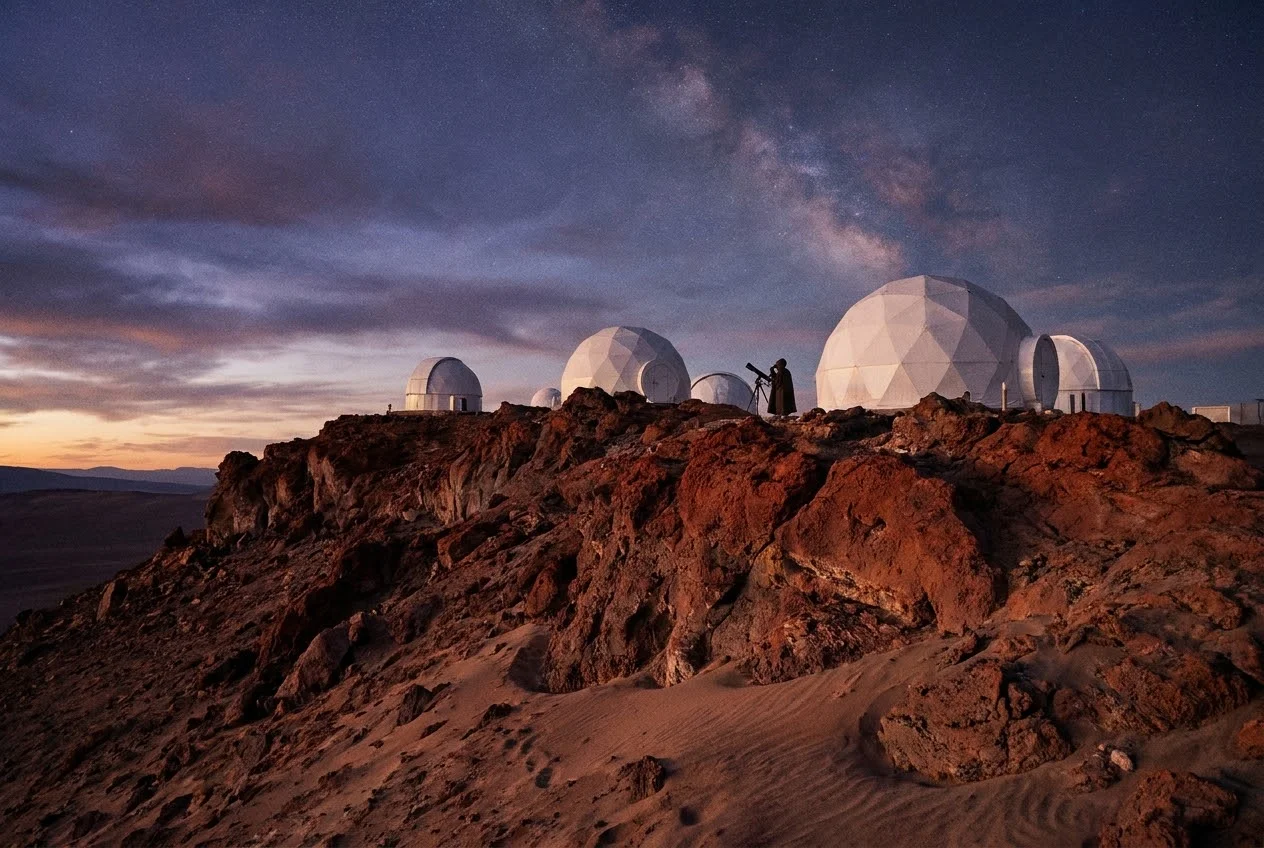
Table Of Contents
- Decoding the Observatories: Scientific vs. Tourist Experiences
- Trip Logistics: Transit, Timing, and Booking Ahead
- Conquering the Altitude: Health and Acclimatization Tips
- Desert Extremes: Seasonal Weather & Packing Essentials
- Atacama Stargazing Seasons & Lunar Planning Guide
- Related FAQs
- Conclusion: The Infinite Expanse
Atacama Desert stargazing tour booking offers travelers a chance to experience one of the clearest night skies on Earth. There is a moment just after twilight in the Atacama Desert when the horizon bleeds from bruised purple into an inky, fathomless black. Suddenly, the sky shatters into a billion points of diamond-hard light. As the driest non-polar desert on Earth, this high-altitude expanse in northern Chile boasts zero light pollution, minimal cloud cover for over 300 nights a year, and atmospheric clarity that makes it one of the world’s premier astronomy destinations. For discerning travelers who rely on premium cultural travel insights and event guides to curate their global itineraries, the Atacama offers an experience that transcends standard tourism, merging cutting-edge astrophysics with ancient Andean cosmology.
Planning a stargazing expedition to this remote corner of South America requires more than simply showing up and looking up. You need to navigate observatory reservation systems, choose reputable guided experiences, and prepare for extreme altitude and dramatic temperature shifts. Booking your tour in advance helps you secure the best viewing opportunities and avoid last-minute availability issues. From selecting the right stargazing experience to understanding local conditions, meticulous preparation will help you unlock the wonders of the cosmos. Here is your definitive guide to stargazing in the Atacama Desert.
Svalbard Polar Night Tourism: Polar Bear Safety, Gear & Dark Season Guide.
Decoding the Observatories: Scientific vs. Tourist Experiences
The first rule of Atacama astronomy is understanding the difference between the scientific research facilities and the tourist observatories. They offer vastly different experiences, and knowing what to expect will dictate your itinerary.
The Scientific Giant: ALMA
The Atacama Large Millimeter/submillimeter Array (ALMA) is the most expensive and complex ground-based telescope in existence. Comprising 66 massive radio antennas, it searches for our cosmic origins in the cold, dark regions of the universe.
- The Experience: ALMA is a working scientific facility. You cannot visit at night, and you will not look through a glass eyepiece. Instead, public tours take place on weekend mornings. Visitors are taken to the Operations Support Facility (OSF) at 2,900 meters, where you can see the control room, laboratories, and antennas undergoing maintenance. The actual array sits at a breathtaking 5,000 meters (16,400 feet) and is strictly off-limits to the public.
- Booking: Tours are entirely free but require registration on the official ALMA website. Tickets are released weeks in advance and routinely sell out within minutes.
The Night Sky: Tourist Observatories
To actually see the Milky Way, the Magellanic Clouds, and the Southern Cross with your own eyes, you must book a dedicated night tour with a tourist observatory operating on the outskirts of San Pedro de Atacama.
- SPACE (San Pedro de Atacama Celestial Explorations): Founded by a French astronomer, SPACE boasts the largest park of public telescopes in South America. It offers a rigorous, deeply educational dive into deep-space observation.
- Ahlarkapin Observatory: For a more cultural approach, Ahlarkapin focuses on Lican Antay (indigenous) ethno-astronomy. Here, guides point out the “Dark Constellations“—shapes formed not by stars, but by the dark dust clouds of the Milky Way, such as the Yacana (the Llama) and the Fox, which have guided Andean agriculture for millennia.
Trip Logistics: Transit, Timing, and Booking Ahead
The journey to the stars begins in the dusty, bohemian oasis of San Pedro de Atacama, a town of adobe brick and unpaved streets that serves as your basecamp.
Getting there requires flying into the capital, Santiago (SCL), and catching a two-hour domestic flight via LATAM or Sky Airline to El Loa Airport in Calama (CJC). From Calama, it is a mesmerizing 1.5-hour transfer along Route 23, a paved highway that winds past the jagged, rust-colored peaks of the Cordillera de la Sal (Salt Mountain Range).
Securing your spot under the southern stars requires strategic foresight. Much like planning a European cultural itinerary and rushing to secure an Edinburgh storytelling festival ticket before autumn arrives, booking your Atacama observatory tours must be done months in advance, especially during the peak New Moon windows.
The Lunar Rule: This is the most critical logistical detail of your trip. Stargazing tours do not operate during the Full Moon. The brilliance of a full moon washes out the Milky Way and deep-sky objects entirely. You must align your travel dates with the New Moon phase, or the days immediately preceding or following it, to ensure total darkness.
Okavango Delta Mokoro Safari: What to Pack, Water Levels & Booking Timeline.
Conquering the Altitude: Health and Acclimatization Tips
The Atacama is not just dry; it is breathtakingly high. San Pedro de Atacama sits at an elevation of 2,400 meters (7,900 feet). While this is manageable for most, many daytime excursions that travelers pair with their night stargazing—such as the geothermal wonders of the El Tatio Geysers—push past 4,320 meters (14,170 feet).
Failing to respect the elevation can result in soroche (altitude sickness), characterized by crushing headaches, nausea, and shortness of breath. To ensure your body acclimatizes safely:
- Hydration is Non-Negotiable: The extreme aridity and altitude will sap your body of moisture. Aim to drink 3 to 4 liters of water daily.
- Dietary Adjustments: Digestion slows down at high altitudes. Avoid heavy red meats, rich foods, and alcohol for the first 48 hours of your trip.
Local Remedies: Embrace the traditional Andean remedy of coca leaf tea, or chachacoma* (a local herb), both of which are highly effective at alleviating mild altitude symptoms.
- Pacing Your Itinerary: Do not attempt high-altitude excursions on your first day. Spend your first 48 hours exploring lower-elevation sites like the Valle de la Luna (Valley of the Moon) before ascending to the geysers or high-altitude lagoons.
Desert Extremes: Seasonal Weather & Packing Essentials
The Atacama is a land of extreme diurnal temperature variations. The same desert that bakes under a 25°C (77°F) sun at noon can plummet to -5°C (23°F) or lower by 2:00 AM when you are standing motionless at a telescope.
Surviving a three-hour stargazing tour requires a meticulous layering system.
- Base Layer: Moisture-wicking thermal underwear (Merino wool is ideal).
- Mid Layer: A heavy fleece or a traditional thick alpaca wool sweater (readily available in San Pedro’s artisan markets).
- Outer Layer: A high-quality 800-fill down jacket paired with a windproof shell. The desert wind at night is piercing.
- Accessories: Insulated gloves, a thick beanie that covers your ears, and sturdy trekking boots paired with heavy wool socks. The cold will seep up through the desert floor into your feet.
- Technical Gear: Bring a headlamp with a red-light setting. White light destroys night vision, and red light is mandatory at all observatories. If you plan to capture the sky, a sturdy tripod and a camera capable of manual mode (long exposure, high ISO, wide aperture) are essential.
House of the Dragon Filming Locations (Spain & Wales): 7-Day Road Trip Itinerary.
Atacama Stargazing Seasons & Lunar Planning Guide
While the Atacama is a year-round destination, certain seasons offer distinct advantages for astronomical observation.
| Season | Months | Night Temperatures | Viewing Conditions | Booking Priority |
|---|---|---|---|---|
| Summer | Dec – Feb | Mild (0°C to 5°C) | Good, but risk of “Altiplanic Winter” (rare cloudy/rainy nights). | High |
| Autumn | Mar – May | Cold (-2°C to 2°C) | Excellent. Crisp, clear skies and stable weather. | Very High |
| Winter | Jun – Aug | Freezing (-10°C to -2°C) | Spectacular clarity. The galactic center of the Milky Way is directly overhead. | Peak |
| Spring | Sep – Nov | Chilly (-5°C to 0°C) | Superb clarity, warming daytime temperatures. | High |
Related FAQs
No. ALMA uses radio telescopes, which look like massive satellite dishes. They collect radio waves, not visible light, meaning there are no eyepieces. To look through optical telescopes, you must book a tourist observatory tour in San Pedro.
Most dedicated stargazing tours will cancel or refuse to operate during a Full Moon because the light pollution from the moon makes it impossible to see the Milky Way, nebulae, or distant galaxies. Always check a lunar calendar before booking your flights.
Most top-tier observatories have a minimum age requirement of 8 years old. The late hours (tours often run from 10:00 PM to 1:00 AM), freezing temperatures, and required silence and stillness make it a challenging environment for toddlers and young children.
No. When you book a stargazing tour, round-trip transportation from a designated meeting point in San Pedro de Atacama is almost always included. Driving yourself in the dark desert is highly discouraged due to unlit, unmarked dirt roads.
Modern flagship smartphones with dedicated “Night Modes” or “Astrophotography Modes” can capture impressive shots of the Milky Way if mounted on a tripod. However, to capture true deep-space detail, a DSLR or mirrorless camera with manual settings is required.
Conclusion: The Infinite Expanse
Standing in the freezing, silent expanse of the Atacama Desert, staring up at the sprawling dust lanes of the Milky Way, offers a profound sense of perspective. It is a place where the boundaries between the ancient earth and the infinite cosmos blur. You are not merely looking at stars; you are looking back in time, viewing light that has traveled for millions of years just to meet your eye in the driest place on the planet.
By respecting the altitude, preparing for the bitter cold, and meticulously timing your visit with the lunar cycle, you ensure that your journey to the Atacama is not just a vacation, but a transformative expedition into the very heart of the universe. Check the lunar calendars, pack your heaviest down jacket, and prepare to be humbled by the southern sky.

Atacama Desert stargazing tour booking offers travelers a chance to experience one of the clearest night skies on Earth. There is a moment just after twilight in the Atacama Desert when the horizon bleeds from bruised purple into an inky, fathomless black. Suddenly, the sky shatters into a billion points of diamond-hard light. As the […]
There is a distinct, almost reverent silence that surrounds you as you glide through the Okavango Delta on an Okavango Delta mokoro safari. The traditional dugout canoe gently parts the papyrus reeds, bringing you eye-level with tiny painted reed frogs, colorful water lilies, and the mirrored reflections of African fish eagles. Whether you are planning […]
Imagine stepping off a plane at 78 degrees North, where the biting Arctic wind greets you and the sky remains an inky, star-studded canvas even at high noon. Svalbard polar night travel offers a surreal and captivating experience during the Polar Night, a period from mid-November to late January when the sun never rises above […]