
The Ultimate 5-Day Seoul Autumn Foliage Itinerary
Disclosure: To help support our website, some of the links below are affiliate links. This means that if you choose to make a purchase, we will earn a commission at no additional cost to you.
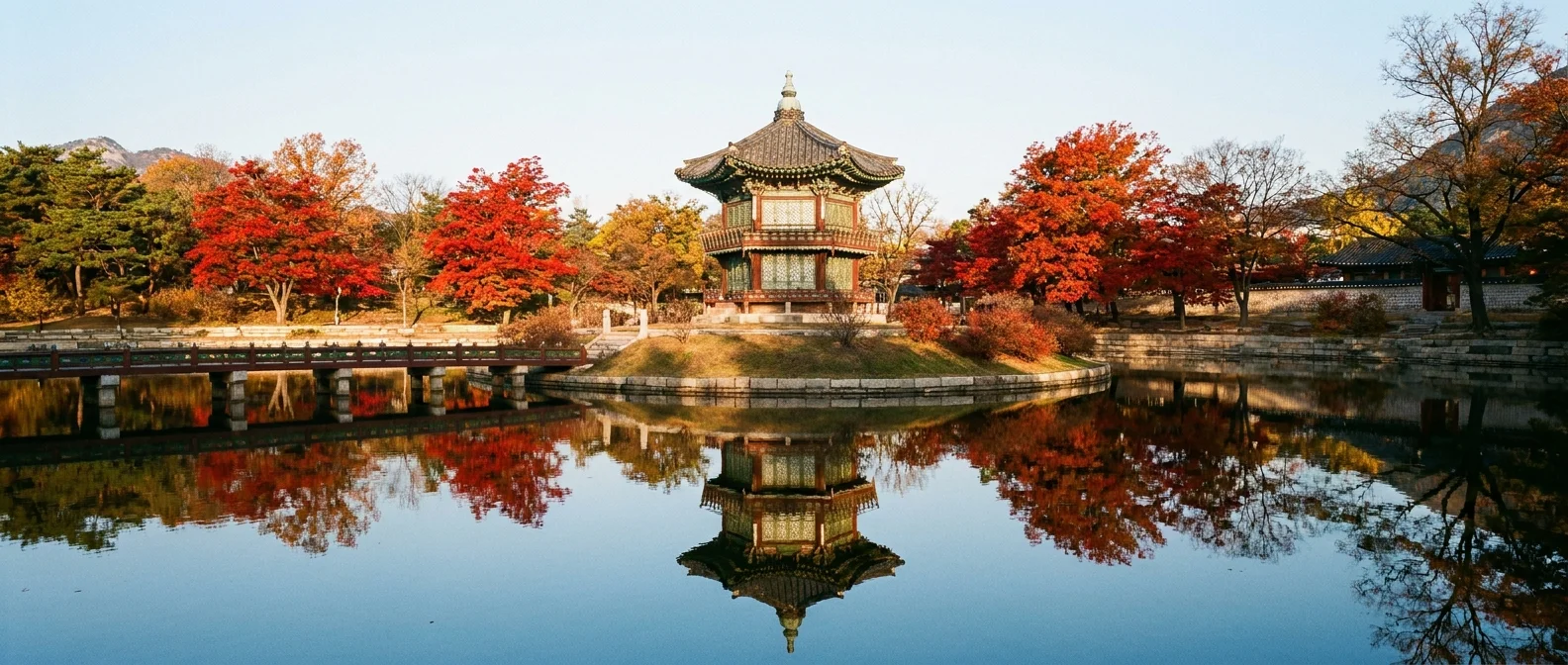
Table Of Contents
- Quick Answer: The Autumn Foliage Snapshot
- Seoul Autumn Planning At-A-Glance
- 1. Seasonal Reality: Seoul Autumn Weather and Packing List
- 2. Logistics: T-Money Transit Card Seoul & Navigation
- 3. Days 1-2: The Historic Core and High Peaks
- 4. Day 3: Urban Foliage and The "Brooklyn" of Seoul
- 5. Days 4-5: The Great Autumn Day Trips
- Mistakes First-Timers Make
- Related FAQs
- Closing
The window for experiencing the perfect Seoul Autumn Foliage Itinerary is notoriously narrow, often lasting only 10 to 14 days between late October and early November. Every traveler wants to know how to enjoy the peak fall colors while avoiding overwhelming weekend crowds. This guide provides a practical day-by-day plan that combines visits to Seoul’s iconic “Big Five” palaces with breathtaking mountain views, scenic parks, and peaceful escapes outside the city.
We’ll help you navigate the transition from the golden Ginkgo trees of Jongno-gu to the fiery red maples of Nami Island while choosing the right transit passes and securing important bookings in advance. You’ll also discover the best times to visit popular attractions, plan efficient travel routes, and avoid unnecessary delays during the busy autumn season. Success in Seoul during this spectacular period requires more than just a camera; it calls for an understanding of the city’s geography, smart travel planning, and a weekday-first approach to visiting the most popular sightseeing spots.
Quick Answer: The Autumn Foliage Snapshot
- The Peak Window: Historically October 28th to November 10th.
- Expected Conditions: Crisp, dry “blue-sky” days: highs of 19°C (66°F), lows of 0°C (32°F).
- The Main Friction: Extreme weekend crowds at national parks and palaces; weekday visits are mandatory for photography.
- Booking Note: The Changdeokgung “Secret Garden” and Hwadam Botanical Garden require reservations weeks in advance.
- Top Stay Area: Jongno-gu for walking access to the historic core.
Seoul Autumn Planning At-A-Glance
| Period | Daytime Temp | Foliage Status | Crowd Level | Best For |
|---|---|---|---|---|
| Mid-October | 18°C – 21°C | Early (Green/Yellow) | Moderate | High-altitude hiking (Bukhansan) |
| Late Oct (Peak) | 12°C – 17°C | Peak (Red/Gold) | Extreme | Palaces and Nami Island |
| Early November | 8°C – 14°C | Late Peak/Falling | High | Urban parks and evening illuminations |
| Mid-November | 3°C – 10°C | Post-Peak (Brown) | Low | Museum hopping and cafe culture |
1. Seasonal Reality: Seoul Autumn Weather and Packing List
The “Onion Method” of Layering
The 15-degree temperature swing between 2:00 PM and 6:00 PM is the primary logistical challenge. When considering what to wear in Seoul in October, you must adopt a layering strategy. Midday temperatures often climb to 19°C under direct sunlight, making heavy coats uncomfortable. However, as soon as the sun dips behind the granite peaks of Bukhansan, the temperature crashes toward 5°C or lower. A base layer of moisture-wicking fabric, a light sweater or fleece, and a wind-resistant outer shell or a packable down vest are essential. Do not rely on a single heavy parka: you will be stripping layers off and on throughout the day as you move between heated subway cars and the chilly outdoors.
Dry Skies and Low Humidity
October is Korea’s driest month. The air is exceptionally clear, which is excellent for photography but taxing on the skin. While rainfall is rare, a single cold drizzle can trigger a mass “leaf-drop,” ending the season early. If the forecast predicts rain, prioritize your “must-see” foliage spots immediately, as the wind and water will strip the Maples within hours. Humidity levels often drop below 30 percent, so carry a small bottle of moisturizer and lip balm in your daypack.
Ginkgo vs. Maple Timing
To execute a successful Seoul autumn foliage itinerary, you must understand the biological sequence of the season. The Ginkgo trees, which line the major boulevards of Jongno-gu and the perimeter of the palaces, turn a brilliant, uniform yellow first. They typically peak 5 to 7 days before the Maples. The Maples, which provide the deep reds and burnt oranges found in the Secret Garden and the national parks, follow shortly after. If you arrive in mid-October, head for the mountains. If you arrive in early November, stay in the city center where the Ginkgos hold their leaves longer.
2. Logistics: T-Money Transit Card Seoul & Navigation
How to Use a T-Money Card in Seoul
The T-money transit card in Seoul is your lifeline for subways, buses, and even taxis. You can purchase the physical card at any CU, GS25, or 7-Eleven convenience store for a cost of 3,000 to 5,000 KRW (roughly 2.25 to 3.75 USD). Note: While you can buy the card itself with a credit card, reloading the balance is a cash-only transaction at subway kiosks or convenience store counters. When using the bus, you must “tap on” at the front door and “tap off” at the rear door. Failure to tap off will result in a maximum fare penalty on your next ride.
The Climate Card vs. T-Money
For a 5-day trip, the “Climate Card” (Tourist version) offers unlimited rides for approximately 15,000 KRW (11 USD). However, travelers should be cautious: this card does not cover the Shinbundang Line or buses that cross outside Seoul city limits. If your itinerary includes Nami Island or Hwadam Botanical Garden, the standard T-money card is more versatile as it can be used for the intercity buses and the ITX-Cheongchun train supplements.
The Google Maps Trap
Google Maps is functionally broken for walking directions in South Korea due to government restrictions on mapping data. It will often show you a straight line through a building or fail to recognize subway exits. You must download Naver Maps or KakaoMap to navigate. These apps provide real-time bus arrival data, tell you which subway car is closest to your transfer, and accurately map the “vertical” terrain of Namsan. Ensure you set the language to English in the settings, though searching for specific locations by their Korean name (found on Google or blogs) often yields more accurate results.
3. Days 1-2: The Historic Core and High Peaks
Day 1: Jongno-gu Seoul Accommodation and Palaces
Secure a Jongno-gu Seoul accommodation to minimize transit time. This district contains the highest density of historic sites and is walkable to the major palaces. Start your first morning at Gyeongbokgung Palace. Arrive at the ticket booth by 8:45 AM to beat the tour groups that arrive for the 9:00 AM opening.
Walk past the main throne hall and head directly to the Hyangwonjeong Pavilion. This hexagonal pavilion sits in the middle of a pond, and during peak autumn, the reflection of the surrounding Maples in the still water is the quintessential Seoul image. For lunch, walk to the nearby Samcheong-dong neighborhood for Kalguksu (knife-cut noodles). The broth is warming, and the area is famous for its stone-wall walkway (Deoksugung Doldam-gil), which is lined with golden Ginkgo trees. Spend your afternoon at Changdeokgung Palace, but only if you have pre-booked the “Secret Garden” (Huwon) tour. This restricted area limits visitors and preserves the most intense autumn colors in the city.
Day 2: Bukhansan National Park Autumn
To see the Bukhansan National Park autumn colors without the “human train” effect, you must go on a Tuesday, Wednesday, or Thursday. Take Subway Line 3 to Gupabal Station. Go to Exit 2 and look for the queue for Bus 704 or 34. The ride takes about 20 minutes to the Bukhansanseong Fortress entrance.
The hike to Baegundae Peak (836 meters) is strenuous and involves navigating steep granite inclines with steel cables. The reward is a 360-degree view of the Seoul metropolitan area draped in orange and red. If you prefer a flatter experience, the Dulle-gil trail circles the base of the mountain and offers excellent foliage without the vertical climb. Post-hike, eat at one of the many restaurants at the park base serving Sanchae Bibimbap (mountain vegetable rice) and Pajeon (scallion pancake). These establishments cater specifically to hikers and offer an authentic glimpse into local mountain culture.
4. Day 3: Urban Foliage and The "Brooklyn" of Seoul
Seoul Forest and the Ginkgo Forest
Start your third day in Seongsu-dong (Subway Line 2, Seoul Forest Station). Seoul Forest is a massive green lung that was once a royal hunting ground. It features a dedicated Ginkgo tree lane where the trees are planted in a tight grid, creating a tunnel of blinding gold. This is one of the best autumn foliage spots near Seoul because it is flat and accessible. After your walk, explore the industrial-chic cafes of Seongsu. This neighborhood, often called the “Brooklyn of Seoul,” features repurposed shoe factories turned into galleries and coffee shops like Onion Seongsu or Daelim Changgo.
Namsan Mountain: The Walking Strategy
In the late afternoon, head toward Namsan Mountain. Most tourists make the mistake of waiting in a 90-minute queue for the Namsan Cable Car at sunset. Instead, take the Namsan Sunhwan Bus (Yellow Bus No. 01) from stations like Chungmuro or Dongguk University. Better yet, walk the Namsan Outdoor Botanical Garden path. This paved trail is flatter than the main summit hike, less crowded, and places you directly under the canopy of the cherry and maple trees, which turn deep shades of crimson. The view of the N Seoul Tower through the autumn leaves is superior from these lower trails than from the crowded observation deck itself.
5. Days 4-5: The Great Autumn Day Trips
Day 4: Nami Island Autumn Tour
Understanding how to get to Nami Island from Seoul is vital for a smooth trip. The most efficient method is the ITX-Cheongchun train from Yongsan Station or Cheongnyangni Station to Gapyeong Station (approx. 60 minutes). From Gapyeong, a 5-minute taxi or the Gapyeong Tour Bus takes you to the ferry wharf.
A Nami Island autumn tour is famous for its “Metasequoia Lane,” where massive redwood-like trees turn a rusty orange. Because Nami is a river island, it stays cooler than the city, meaning the leaves often change color a few days earlier. To avoid the crowds, arrive at the ferry wharf by 7:30 AM for the first boat at 8:00 AM. By 11:00 AM, the island will be crowded with day-trippers, which is your cue to head to the nearby Garden of Morning Calm, which offers a more manicured but equally impressive foliage display.
Day 5: Naejangsan Fall Foliage vs. Hwadam
If you are a dedicated foliage seeker, Naejangsan fall foliage is the gold standard. It requires a 3-hour journey south via the KTX train to Jeong-eup Station, followed by a local bus. The “Maple Tunnel” at Naejangsan consists of over 100 varieties of maple trees. However, for those on a tighter 5-day schedule, Hwadam Botanical Garden is the superior alternative. Located just 45 minutes from Seoul in Gwangju (Gyeonggi-do), Hwadam is a private eco-forest. It features a monorail that glides through the upper canopy of a maple forest, providing angles for photography that are impossible on foot. Note that Hwadam requires an online reservation made weeks in advance: they do not sell walk-in tickets during the peak autumn season.
Mistakes First-Timers Make
1. The Google Maps Trap: Relying on Google for walking directions will lead you to dead ends, military-restricted zones, or simply the wrong side of a 10-lane highway.
The Fix: Use Naver Maps exclusively. It shows the exact location of subway exits and the most efficient pedestrian crossings.
2. Hiking on Saturdays: Bukhansan and Naejangsan become literal “human queues” on weekends. You will spend more time waiting for people to pass on narrow trails than looking at trees.
The Fix: Schedule all mountain hikes for Tuesday through Thursday.
3. Ignoring Exit Numbers: Meeting “at the station” is impossible in Seoul. Major hubs like Gangnam or Seoul Station have over 10 exits spanning several city blocks.
The Fix: Always specify a numbered exit (e.g., “Myeongdong Station, Exit 6”) for meetings or navigation starts.
4. Missing the Cash Requirement: You cannot reload a T-money card with a foreign credit card at the station kiosks.
The Fix: Always keep 20,000 KRW in cash specifically for transit. If you run out of cash, you will be stranded at the turnstile.
Related FAQs
Use the subway to reach the outskirts (Line 3 for Bukhansan, Line 7 for Dobongsan) and then transfer to a local bus. Naver Maps will tell you exactly which bus number and which stop to use.
Namsan Mountain. You can take a bus or cable car to the top and walk the paved, flat perimeter paths that offer 360-degree views of the city without any rock scrambling.
Absolutely. It is the most preserved foliage spot in the city and offers a sense of tranquility not found in the main palace grounds. You must book the English tour in advance on the Changdeokgung website.
Jongno-gu is best for traditional sights and palace access. Mapo-gu (Hongdae) is better for nightlife and younger travelers, though it requires a 20-minute subway ride to reach the historic core.
Yes, especially the dedicated shuttle buses from Insadong or Namdaemun, as they sell out weeks before the peak foliage window. If taking the train, book your ITX-Cheongchun tickets 30 days in advance via the Korail website.
Expect a range of 12°C to 19°C during the day, but it can drop to 0°C at night. The wind chill in open areas like Gyeongbokgung can make it feel significantly colder. Layering is essential.
While it varies based on summer rainfall, peak city foliage is historically between October 28 and November 10. High-altitude areas like Bukhansan peak about 7 to 10 days earlier.
Closing
With your T-money card loaded and your Naver Maps bookmarks set, the only thing left is to monitor the KMA (Korea Meteorological Administration) foliage forecast as your departure date nears. Your next step is to secure your Jongno-gu accommodation before the mid-October price surge begins.

As the humidity of the Mid-Atlantic swamp summer breaks, Philadelphia transforms into a corridor of burnt orange maples and crisp, colonial-era winds. For travelers planning a Philadelphia autumn weekend itinerary, the window between the Autumnal Equinox and Veterans Day offers the most temperate walking conditions of the year. The central question for most visitors is […]
The window for experiencing the perfect Seoul Autumn Foliage Itinerary is notoriously narrow, often lasting only 10 to 14 days between late October and early November. Every traveler wants to know how to enjoy the peak fall colors while avoiding overwhelming weekend crowds. This guide provides a practical day-by-day plan that combines visits to Seoul’s […]
The Sapporo Snow Festival, known locally as Yuki Matsuri, stands as Hokkaido’s premier winter event. Every February, the festival transforms the city into a spectacular gallery of massive ice and snow sculptures, attracting over 2 million visitors. For travelers, attending this event requires careful logistical planning. Hotel prices can rise significantly, sometimes reaching 400 percent […]