
Book Your Spring 2027 Kyoto Ryokan Before It Sells Out
Disclosure: To help support our website, some of the links below are affiliate links. This means that if you choose to make a purchase, we will earn a commission at no additional cost to you.
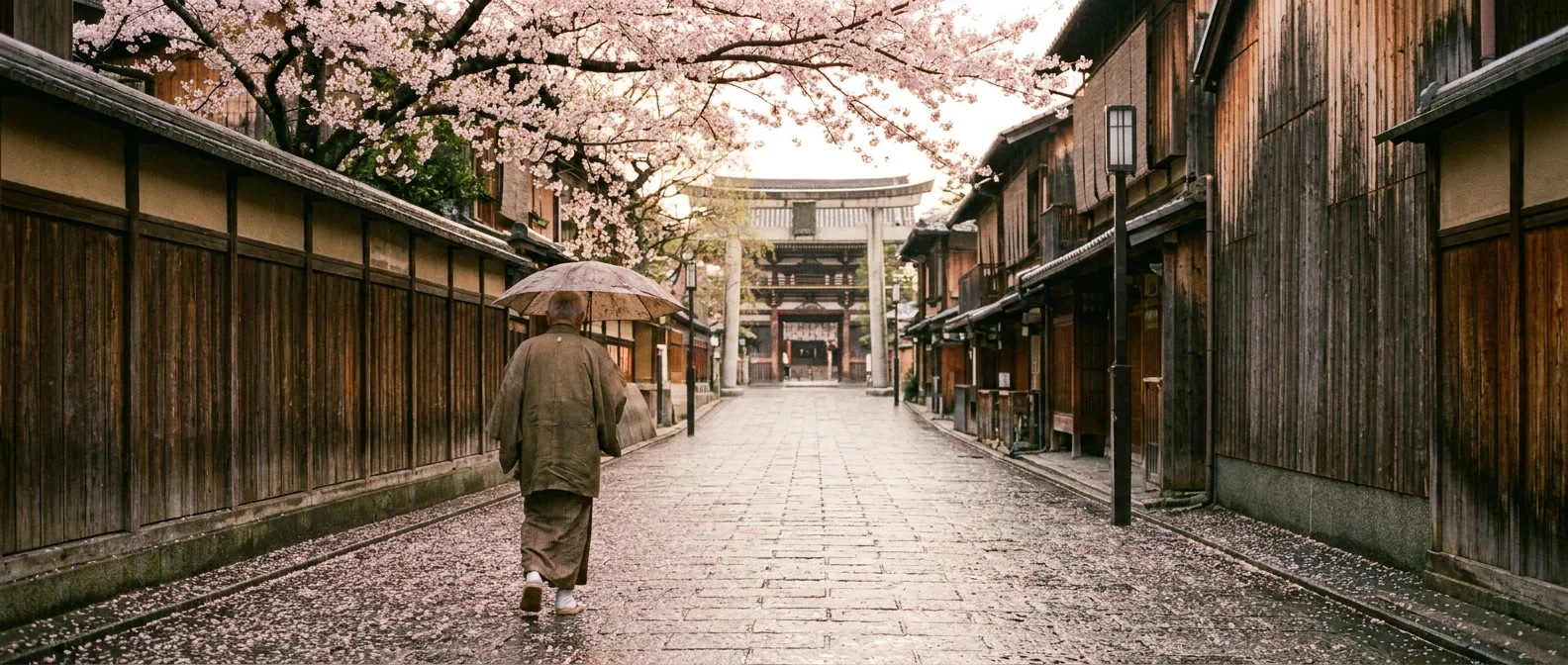
Table Of Contents
- Quick Answer
- Kyoto Spring 2027: At-a-Glance Planning Table
- The Six-Month Window: Securing Your 2027 Ryokan
- Navigating the 2027 Congestion Forecast
- Transit Mechanics & Luggage Logistics
- Weather, Wardrobe, and the "Kyoto Chill"
- Money, Etiquette, and the District Food Map
- Mistakes First-Timers Make
- Related FAQs
- Next Action
The ephemeral beauty of Sakura, or cherry blossoms, transforms Kyoto into one of the world’s most competitive accommodation markets for roughly fourteen days each spring. For spring 2027, Kyoto’s cherry blossoms should reach peak bloom between late March and early April, although changing weather conditions may shift the exact dates. While the blossoms attract visitors from around the world, travelers must secure their traditional accommodation well before the flowers bloom, ideally around six months in advance.
Booking a Kyoto Ryokan early can help you secure an authentic Japanese inn before demand pushes prices higher and popular properties sell out. To plan a successful Kyoto cherry blossom itinerary for 2027, start preparing in October 2026 rather than waiting until other travelers begin arranging their spring vacations.
This guide explains the specific “October Trigger” for ryokan bookings, highlights essential reservation strategies, and explores practical transit options for navigating Kyoto during the busy Hanami season. With careful planning, you can enjoy the city’s famous cherry blossoms, experience traditional Japanese hospitality, and reduce the stress of finding accommodation during peak bloom.
Quick Answer
The critical Kyoto ryokan booking window for the 2027 peak opens in October 2026. Most high-end traditional inns operate on a strict 180-day rolling calendar. For the best experience, aim for the window of March 25 to April 10, 2027. The primary friction points you will encounter are extreme bus congestion and new “no-large-luggage” policies on public transit. Expect accommodation prices in the historic Higashiyama district to triple during the “Man-kai” (full bloom) week. Secure your room first: the rest of the itinerary can be built around that anchor.
Kyoto Spring 2027: At-a-Glance Planning Table
| Month | Avg. Daytime Temp | Crowd Level | Best For |
|---|---|---|---|
| March (Early) | 13°C (55°F) | Moderate | Plum blossoms and lower accommodation rates |
| March (Late) | 15°C (59°F) | Extreme | “Kaika” (First bloom) and night illuminations |
| April (Early) | 18°C (64°F) | Peak | “Man-kai” (Full bloom) and peak Sakura scenery |
| April (Late) | 20°C (68°F) | High | Late-blooming trees and the “Sakura-ame” petal carpets |
The Six-Month Window: Securing Your 2027 Ryokan
Why October 2026 is the Critical Trigger
Traditional Japanese ryokans, particularly the elite establishments in Kyoto, do not follow the multi-year booking windows of international hotel chains. They operate on a 180-day cycle. If you intend to stay in a “Machiya” (a traditional wooden townhouse) or a high-end ryokan like those found in the Gion or Nanzen-ji areas, you must book a Kyoto ryokan six months in advance. For a stay starting April 1, 2027, your booking date is October 3, 2026. By November, the most authentic properties with garden views or private onsen baths will be entirely committed to repeat domestic guests and proactive international travelers.
Higashiyama vs. Arashiyama: Choosing Your Anchor
Choosing where to stay is a choice of atmosphere and transit logistics. This Higashiyama cherry blossom guide recommends the eastern district for those who want the quintessential Kyoto experience: stone-paved streets, proximity to Kiyomizu-dera, and the ability to walk to the Yasaka Shrine. Higashiyama is approximately 15 to 20 minutes from Kyoto Station by bus, though during Sakura season, this can easily double.
Arashiyama, located in the west, offers a more nature-centric stay near the Togetsukyo Bridge and the Katsura River. While beautiful, it is more isolated. Access to Arashiyama is best managed via the JR Sagano Line, which takes about 20 minutes from Kyoto Station. If your goal is to see the blossoms at dawn before the crowds arrive, stay in Higashiyama. If you prefer the sound of the river and a slower pace, choose Arashiyama.
Beyond the Room: Kaiseki and Special Entries
Securing the room is only the first step. High-end Kaiseki (multi-course) dinners at renowned restaurants like Kikunoi or Hyotei require reservations two to three months in advance, typically in January or February 2027. Furthermore, certain “Special Entry” Zen gardens, such as Saiho-ji (the Moss Temple), require a specific reservation process that often involves a return postcard or a precise online window. Do not assume you can walk into a top-tier dining room or a restricted temple during the peak bloom week.
Navigating the 2027 Congestion Forecast
The “Subway + Walk” Strategy to Beat Gridlock
The most significant mistake visitors make is relying on the Kyoto City Bus system during the peak bloom. The Kyoto travel congestion forecast for 2027 predicts that the Raku Bus lines (100, 101, and 102) will face significant delays. A standard 15-minute bus ride from Kyoto Station to Gion can take 50 minutes or more in peak traffic.
To maintain your schedule, prioritize the Karasuma (green) and Tozai (vermillion) subway lines. For example, if you are heading to the Philosopher’s Path, take the Tozai line to Keage Station and walk the remaining distance. This bypasses the surface gridlock entirely. Walking is not just a suggestion in Kyoto: it is the most efficient form of transport between the clustered sites of the Higashiyama district.
The 6:00 AM Rule for Iconic Sites
To succeed in avoiding cherry blossom crowds in Kyoto, you must shift your internal clock. Iconic locations such as Fushimi Inari Taisha and the Arashiyama Bamboo Grove are open 24 hours a day. Arriving at 6:30 AM allows you to experience these sites in silence. By 9:00 AM, the tour buses arrive, and the density of people makes photography and quiet contemplation nearly impossible. The “Golden Hour” for Sakura photography in Kyoto is the first sixty minutes after sunrise, usually around 5:45 AM in early April.
Night Illuminations (Yozakura) and Mid-Week Advantages
When the sun sets, the focus shifts to “Yozakura” or evening blossom viewing. Temples like Kodai-ji, To-ji, and Kiyomizu-dera host special night illuminations where the trees are lit from below. These events typically cost between ¥600 and ¥1,000. While crowded, the atmosphere is markedly different from the daytime. To minimize friction, schedule your visits to the most popular temples for Tuesday through Thursday. Domestic tourism from Osaka and Tokyo surges on Friday evenings and weekends, making the mid-week window your best opportunity for a relatively calm experience.
Transit Mechanics & Luggage Logistics
Why the JR Pass Isn’t Your Best Friend in 2027
Following the massive price increase in late 2023, the National JR Pass is rarely cost-effective for a trip centered on Kyoto. Unless you are traveling from Tokyo to Hiroshima and back within a seven-day window, individual Shinkansen tickets are more economical. For local travel within the city, the Kyoto Sightseeing Pass (¥1,100 for one day) covers both the subway and the bus lines. However, for most travelers, simply using a digital IC card is the most frictionless method.
Using Luggage Forwarding (Takkyubin) to Stay Mobile
Kyoto has implemented strict policies discouraging large suitcases on city buses to alleviate crowding. Using luggage forwarding in Kyoto, Japan, known as Takkyubin, is the professional way to handle your bags. You can send your luggage from Kansai International Airport (KIX) directly to your ryokan for approximately ¥2,500 to ¥3,500 per bag. It typically arrives the same day if sent early, or the next morning. This allows you to board the Haruka Express train and the local subway without struggling with oversized items in crowded stations.
IC Cards and the Haruka Express
Upon arrival at KIX, the most efficient transit into the city is the JR Haruka Express. This “Hello Kitty” themed train reaches Kyoto Station in 75 minutes. Tickets cost between ¥3,000 and ¥3,600 depending on whether you reserve a seat. For daily transit, ensure you have a mobile IC card (Suica or ICOCA) loaded into your Apple or Google Wallet. This eliminates the need to stand at ticket machines. You can tap in and out of all subways, buses, and even use the balance at 7-Eleven or Lawson convenience stores. These Kyoto luggage forwarding services and digital payment tools are the foundation of a smooth trip.
Weather, Wardrobe, and the "Kyoto Chill"
Layering for “San-kan-shi-on”
Kyoto in the spring follows a meteorological pattern known as “San-kan-shi-on,” which translates to “three cold days, four warm days.” When considering what to wear in Kyoto spring, do not be fooled by the presence of flowers. The city sits in a valley, and the damp cold can be biting, especially at night. Daytime temperatures might reach 18°C (64°F), but as soon as the sun drops, it can plummet to 3°C (37°F). Windproof light jackets and thermal base layers, such as Uniqlo Heattech, are essential. A trench coat or a light wool coat provides the necessary versatility for both temperature swings and the slightly more formal atmosphere of high-end ryokans.
Footwear for 25,000 Steps
Your spring Kyoto packing list must prioritize high-rebound walking shoes. You will likely walk between 15,000 and 25,000 steps per day. Crucially, these shoes should be slip-on or have easy-fastening mechanisms. Entering temples, traditional restaurants, and ryokans requires you to remove your shoes multiple times a day. Fumbling with laces while a queue forms behind you is a significant point of friction. Ensure your socks are in good condition, as they will be visible to everyone in these shoe-free environments.
Managing the “Sakura-ame” (Blossom Rain)
April in Kyoto is prone to sudden rain showers, known as “Sakura-ame.” This rain is the primary threat to the blossoms: a heavy downpour can end the “Man-kai” peak in a single afternoon, knocking the petals to the ground. A compact, sturdy travel umbrella is a mandatory daily carry. If you find yourself caught without one, every convenience store sells the iconic clear plastic umbrellas for about ¥700, which have become a staple of the Japanese rainy-day aesthetic.
Money, Etiquette, and the District Food Map
The Cash-Only Reality of Historic Kyoto
Despite Japan’s technological reputation, historic Kyoto remains heavily dependent on cash. While your ryokan and major department stores like Takashimaya will accept credit cards, the majority of temples, small tea houses, and traditional craft shops do not. Temple entry fees are usually between ¥400 and ¥600 and must be paid in cash. Plan to carry at least ¥10,000 in cash per person daily to avoid the frustration of searching for an international-friendly ATM (found primarily in 7-Eleven stores).
Avoiding “Shitsurei” (Rude) Behavior
Kyoto residents are famously protective of their city’s dignity. There are several behaviors considered “shitsurei” or rude that can result in fines or social friction. Eating while walking (tabearuki) is discouraged in most historic districts: if you buy street food, eat it at the stall. In the Gion district, there are strict “no-photo” zones in the private alleys to protect the privacy of Geiko and Maiko. Harassing these traditional artists for photos is strictly forbidden and monitored by local patrols.
A District-by-District Flavor Guide
To navigate the city effectively, use a Kyoto travel comfort map approach by associating districts with their culinary specialties. In Higashiyama, look for “Yatsuhashi,” a triangular cinnamon-flavored mochi. In Arashiyama, the specialty is “Yudofu” (boiled tofu), often served in multi-course meals overlooking the river. Near Fushimi Inari, try the “Inari Sushi,” which consists of vinegared rice tucked into sweet fried tofu pouches. A significant budget hack for luxury travelers is the “Lunch Set.” Many Michelin-starred restaurants that charge ¥30,000 for dinner offer lunch menus for ¥3,000 to ¥5,000, providing the same quality at a fraction of the cost.
Mistakes First-Timers Make
Relying on Buses During Peak Bloom
The consequence of this is losing two to three hours of precious daylight to traffic gridlock. The fix is simple: use the subway to the nearest station, such as Gion-Shijo or Kitaoji, and walk the final 15 minutes. The subway remains on time regardless of the surface traffic.
Bringing Large Suitcases on Public Buses
Drivers may refuse boarding if the bus is crowded, which it always is in April. This causes extreme social friction with local commuters. The fix is to use Takkyubin luggage forwarding from your previous city or the airport. Your bags will meet you at your ryokan, and you can travel with just a daypack.
Eating While Walking (Tabearuki)
This is viewed as rude and messy in Kyoto’s historic districts. Fines have been introduced in certain areas of Gion to curb this. The fix is to eat at the stall where you purchased the food and use their provided trash bin, as public trash cans are nearly non-existent in Japan.
Related FAQs
The “Kaika” (first bloom) usually begins around March 25, with “Man-kai” (full bloom) occurring between April 1 and April 5. However, these dates fluctuate based on the preceding winter’s temperatures. You should check the official Japan Meteorological Corporation forecasts starting in January 2027 for the most accurate window.
In 2027, the JR Pass is only worth the investment if you are performing a long-distance round-trip, such as Tokyo to Hiroshima, within seven days. For a Kyoto-focused itinerary, it is much cheaper to buy individual Shinkansen tickets and use a local Kyoto Sightseeing Pass or an IC card for city travel.
Yes, but you must avoid the “Big Three” (Kiyomizu-dera, Kinkaku-ji, and Arashiyama) during midday. Instead, head to the Kyoto Botanical Gardens in the north or walk the banks of the Kamogawa River north of Imadegawa Street at sunrise. These areas offer spectacular views with a fraction of the foot traffic.
Most temples are walk-up and do not require reservations. However, “Special Night Entries” and restricted sites like Saiho-ji or the Imperial Villas (Katsura and Shugakuin) require booking through their respective websites or via a postcard system.
Pack for variability. You need layers, a windproof outer shell, and slip-on shoes. Do not forget a dedicated coin purse: you will accumulate a large number of ¥1, ¥10, and ¥100 coins from temple entry fees and vending machines.
While the city is modernizing, the “authentic” Kyoto experience remains heavily cash-dependent. Most temples, traditional tea houses, and small noodle shops do not accept credit cards. Always ensure you have a minimum of ¥10,000 in your wallet before starting your day.
Next Action
Set a digital reminder for October 1st, 2026. Use the intervening months to research specific ryokans in the Higashiyama district so you are prepared to book the moment the 180-day window opens. Success in Kyoto is entirely dependent on this six-month lead time.

The ephemeral beauty of Sakura, or cherry blossoms, transforms Kyoto into one of the world’s most competitive accommodation markets for roughly fourteen days each spring. For spring 2027, Kyoto’s cherry blossoms should reach peak bloom between late March and early April, although changing weather conditions may shift the exact dates. While the blossoms attract visitors […]
The “Quiet Kyoto” window between December and February offers a sensory contrast that makes winter travel in Japan truly memorable. Cold northern winds sweep through the ancient streets, while steam rises from hot springs and traditional Japanese baths. Although many travelers ask how they can explore Kyoto without the cherry blossom crowds, winter brings its […]
The allure of the Kyoto cherry blossom season is timeless, but the logistics of securing a traditional stay are increasingly cutthroat. For travelers planning a Kyoto Ryokan Spring getaway and a Kyoto cherry blossom itinerary for 2027, the most critical booking date isn’t in spring; it is in October 2026. This guide answers the most […]