
Tokyo’s Viral Cat Temple: Gotokuji Autumn Guide
Disclosure: To help support our website, some of the links below are affiliate links. This means that if you choose to make a purchase, we will earn a commission at no additional cost to you.
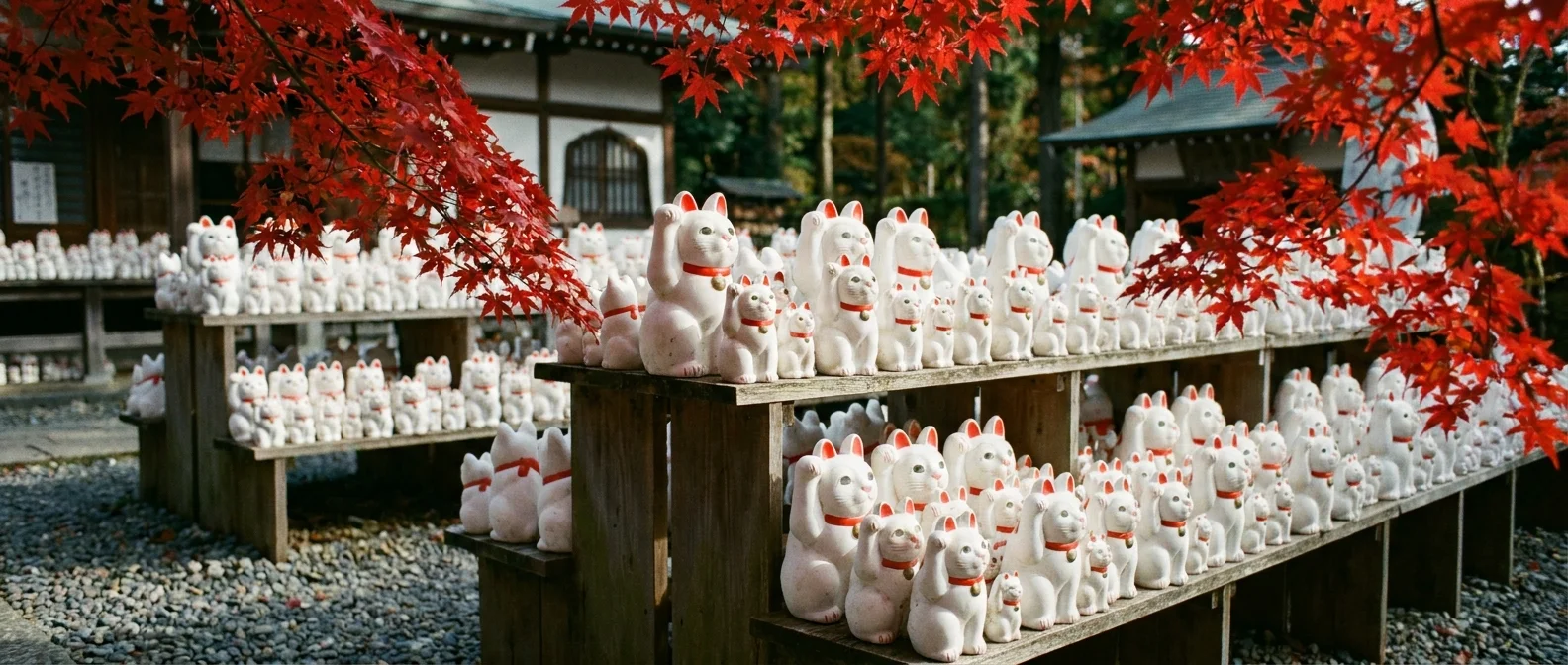
Table Of Contents
The viral “Cat Temple” of Tokyo, Gotokuji, has become a TikTok and Instagram sensation, attracting travelers eager to photograph its thousands of white Maneki-neko (beckoning cat) statues. However, visiting this sacred Setagaya site during the autumn season requires more than just a camera. As the maple leaves turn shades of red, orange, and gold, the temple offers a beautiful contrast between traditional Japanese architecture, peaceful gardens, and its famous lucky cats. This Gotokuji Temple Tokyo autumn guide helps you plan a memorable visit while avoiding unnecessary crowds and respecting the temple’s Zen Buddhist roots. You’ll discover the best time to visit, how to reach Gotokuji by public transport, what to expect during autumn, and where to find the temple’s iconic lucky cat souvenirs.
We’ll also share practical photography tips, local neighborhood insights, and advice for exploring the grounds at a relaxed pace. Whether you’re visiting Tokyo for the first time or searching for a quieter cultural experience beyond the city’s busiest attractions, this guide will help you make the most of your Gotokuji Temple autumn adventure.
Quick Answer
- Best Window: Late November to early December for peak autumn foliage (Momiji).
- Expected Conditions: Crisp, clear days (7°C to 18°C) with high “Fuji-viewing” probability.
- Main Friction: The “Express Train Trap”: boarding the wrong Odakyu line train that skips Gotokuji Station entirely.
- Booking Note: The temple is free to enter, but cat figurines are cash-only and frequently sell out by 12:00 PM.
| Month | Avg. Daytime Temp | Crowd Level | Best For |
|---|---|---|---|
| October | 21°C (70°F) | Moderate | Mild weather and local festivals |
| November | 16°C (61°F) | High | Peak autumn foliage and photography |
| December | 11°C (52°F) | Moderate | Clear skies and winter “luck” rituals |
Navigating Tokyo Transit to Setagaya
Getting to Gotokuji is a lesson in Tokyo’s hub-and-spoke rail system. While it looks close to Shinjuku on a map, the residential nature of Setagaya Ward means you must master the local lines. Many travelers lose an hour of their morning simply by standing on the wrong platform or boarding a train that does not stop at smaller residential stations.
The “Express Trap” and the Odakyu Line
When researching how to get to Gotokuji Temple, most travelers start at Shinjuku Station. Shinjuku is the busiest railway station in the world, and the Odakyu Line platforms are located on the western side of the complex. The critical error is boarding an “Express,” “Semi-Express,” or “Rapid-Express” train. These trains are designed for commuters heading to distant suburbs like Machida or Odawara and will fly past Gotokuji without stopping.
You must specifically board the Local (Kakueki-teisha) train. These are usually indicated by blue signage or blue text on the electronic overhead displays. The journey from Shinjuku to Gotokuji Station takes approximately 15 minutes and costs ¥190 (roughly $1.30 USD). If you accidentally board an express, get off at the first stop (usually Kyodo or Seijo-gakuenmae) and take a local train back in the opposite direction. Navigating Tokyo transit to Setagaya requires constant attention to the train type, not just the destination.
The Cinematic Route: Tokyu Setagaya Line Tram
For a more scenic approach, use the Tokyu Setagaya Line, one of Tokyo’s last two remaining street-level trams. This route is often overlooked by tourists but is highly recommended for those who want to see the “low-city” atmosphere of Setagaya. Board at Sangenjaya Station and ride the two-car tram to Miyanosaka Station.
This station is actually closer to the temple’s side gate (a 5-minute walk) than the main Odakyu station. The tram operates on a flat fare of approximately ¥160. It moves slowly through narrow residential corridors where the train tracks are inches from people’s front doors. This is a primary Tokyo travel pass option for those who enjoy slow travel. The tram itself is often decorated with cat motifs, including cat-shaped hand straps and feline decals on the exterior.
Digital vs. Physical: Suica and Pasmo Logistics
Navigating Tokyo transit to Setagaya is significantly easier with an IC card. However, physical Suica cards are currently in short supply due to global semiconductor shortages. Travelers should prioritize adding a digital Suica or Pasmo to their Apple or Google Wallet before arrival. This allows you to tap your phone at the turnstiles without standing in line at ticket machines.
If you require a physical card for sentimental reasons or because your phone does not support the technology, look for the Welcome Suica (a red card with cherry blossom designs) at Haneda or Narita airports. This card has a 28-day validity period and requires no deposit, but it cannot be refunded. Suica card for Tokyo transit remains the most efficient way to pay for both the Odakyu Line and the Tokyu Setagaya tram. Verify your balance before leaving Shinjuku, as the reloading machines at Gotokuji Station are fewer in number and often have queues.
Timing Your Visit: Gotokuji Temple Autumn Foliage Timing
The “viral” look of the temple: white cats framed by red maples: is a narrow window. Timing your arrival is the difference between a serene spiritual experience and a crowded “Instagram queue.”
The Momiji Peak and Daylight Strategy
The Gotokuji temple autumn foliage timing typically hits its stride between the last week of November and the first week of December. During this period, the Iroha Momiji (Japanese Maple) trees that surround the Shofuku-den (the cat shrine) turn a deep, saturated crimson.
Sunset in Tokyo during late November occurs as early as 4:30 PM. To capture the best light on the Maneki-neko statues, arrive between 9:00 AM and 10:30 AM. The morning sun hits the statues directly, providing a clear, bright light that brings out the detail in the figurines. By 1:00 PM, the sun moves behind the temple’s main hall, casting long shadows over the cat viewing area. Furthermore, afternoon crowds peak between 1:00 PM and 3:30 PM, making it difficult to find a clear angle for photography. Tokyo autumn foliage temples are popular with local retirees and photography clubs, so early arrival is the only way to ensure a quiet environment.
Securing the Maneki-neko Ritual
Many visitors want to participate in the ritual: buying a cat, making a wish, and leaving it at the temple once the wish is granted. However, the temple shop frequently sells out of popular sizes by noon during the autumn season. Arriving at opening (9:00 AM) is mandatory if you want a specific size.
The figurines come in nine sizes, ranging from the tiny “bean” size (size 1, approx. ¥500) to the large traditional versions (size 8, approx. ¥5,000). The mid-range sizes (size 3 and 5) are the most popular and sell out first. Note that Gotokuji is a Soto Zen temple, not a tourist attraction or a cat cafe. The ritual is a serious religious practice. The “Maneki-neko Day” weekend in late September triggers the start of the high season, and the temple remains busy through the New Year period.
Setagaya Neighborhood Walking Tour: Beyond the Cats
Gotokuji is located in one of Tokyo’s most desirable residential wards. A Setagaya neighborhood walking tour allows you to pair the temple visit with indie culture and local flavors that most tourists miss.
Shimokitazawa: The Indie Neighbor
Just 5 minutes from Gotokuji via the Odakyu Line (two stops away), Shimokitazawa is the cultural heart of West Tokyo. After your morning at the temple, head here for vintage shopping and vinyl records. The neighborhood underwent a massive renovation recently, with the “Reload” and “Sen-eki” developments adding modern boutiques and cafes along the old sunken railway tracks.
This neighborhood is famous for Hokkaido-style Soup Curry. Look for Rojiura Curry Samurai for a hearty autumn meal. Their curry features over 20 types of flash-fried vegetables and is a staple for locals on cold November days. Shimokitazawa is a maze of narrow alleys that are best explored on foot after 11:00 AM when the majority of independent shops open their doors.
Sangenjaya and Shoin Jinja-mae
For a deeper dive into the ward, take the Setagaya Line tram to Shoin Jinja-mae. This street is currently a hub for young Tokyoites, centered around a shrine dedicated to Yoshida Shoin, a Meiji-era scholar. The street features traditional street-side Oden stalls, which serve simmered vegetables and fish cakes in a savory dashi broth. This is the quintessential Tokyo autumn snack.
End your day at Sangenjaya’s “Carrot Tower.” This orange-colored skyscraper has a free observation deck on the 26th floor. On clear autumn days, you can see Mount Fuji to the west and the sprawling Tokyo skyline to the east. It is one of the few places in the city where you can get a high-altitude view without paying an entrance fee. While there are few boutique ryokans in Tokyo‘s residential Setagaya, staying in a local guesthouse in this area provides a much quieter experience than the neon-soaked streets of Shinjuku.
Money, Etiquette, and Connectivity
Setagaya is safe and welcoming, but the “Cat Temple” has specific rules that catch trend-chasers off guard.
The Cash-Only Reality
While you can use your Suica card Tokyo transit for the train and even for snacks at convenience stores, Gotokuji Temple itself is strictly cash-only. This applies to all cat figurines, omamori (amulets), and Goshuin (temple stamps).
Ensure you have small denominations (¥100, ¥500, and ¥1,000 notes) before leaving Shinjuku. ATMs in the residential streets of Gotokuji can be hard to find and may not accept international cards. A Goshuin (a hand-drawn calligraphy stamp) usually costs a ¥500 donation. If you want one, you must bring your own Goshuincho (stamp book) or purchase one at the temple. The monks will not write on random pieces of paper. This is a common point of friction for travelers seeking the best Tokyo travel card for tourists; no card will work at the temple counter.
The “No-Touch” Rule and Photography Etiquette
The most common etiquette breach is visitors moving or repositioning the cat statues for a better photo. These cats are religious offerings left by people whose wishes came true. They are not props. Touching them is considered disrespectful and can damage the fragile ceramic.
Additionally, if you see a monk or temple staff performing a ritual or writing a Goshuin, do not interrupt or film them from a close distance. Photography is generally allowed in the outdoor areas, but it is strictly prohibited inside the main prayer halls. Tipping is not practiced in Japan and may cause confusion or offense if attempted at the temple shop. Simply bow slightly when receiving your figurine or stamp.
Staying Connected in the Residential Maze
Navigating the winding streets of Setagaya while filming cat walls will drain your phone battery quickly. Because the neighborhood is residential and lacks the massive landmarks of Central Tokyo, Google Maps is essential for finding hidden gems.
For example, Kameya, a traditional confectionery shop near the station, sells cat-shaped Maneki-neko Monaka (crispy wafers filled with red bean paste). Finding these small shops requires a stable data connection. A pocket wifi rental Tokyo station pickup or a pre-installed eSIM is vital for real-time transit updates. This ensures you do not miss the last “Local” train or get lost in the residential backstreets between the temple and the tram station.
Mistakes First-Timers Make
1. The Express Train Bypass: Boarding an Express train at Shinjuku and realizing too late that it does not stop at Gotokuji. The fix: Look for the blue “Local” sign on the Odakyu platform and double-check the display board.
2. Treating it Like a Cat Cafe: Expecting live cats to play with. The fix: Understand this is a Zen Buddhist temple; the cats are statues. Maintain a quiet, respectful volume.
3. Arriving After 2:00 PM: Finding the cat figurines sold out and the best photography light gone. The fix: Make Gotokuji your first stop of the day, arriving by 9:30 AM.
4. Wearing Heels or Flip-Flops: Struggling to walk on the thick, loose gravel (tamajari) that covers the temple grounds. The fix: Wear sturdy sneakers or walking shoes.
5. Relying on Credit Cards: Assuming the temple shop accepts Visa or Mastercard. The fix: Carry at least ¥5,000 in cash specifically for temple purchases.
Related FAQs
Take the Odakyu Line from Shinjuku Station. You must board a Local train (Kakueki-teisha). The ride takes about 15 minutes to Gotokuji Station. From there, it is a 10 to 15 minute walk through a shopping street. Alternatively, take the tram from Sangenjaya to Miyanosaka Station for a shorter walk.
Yes. While the cats are there year-round, the temple features stunning maple trees that turn vibrant red in late November. The contrast of the white statues against the autumn foliage is one of Tokyo’s best seasonal photo opportunities, and the cooler weather makes the Setagaya walk much more pleasant.
For most tourists, a digital Suica or Pasmo card on your smartphone is the best option. It allows for seamless transfers between the Odakyu Line and the Tokyu Setagaya tram. If you prefer physical cards, the Welcome Suica is the standard for tourists, available at major airports.
Plan for 60 to 90 minutes at the temple itself. This allows time to explore the cat shrine, the three-story pagoda, and the Ii Clan cemetery. If you include the walk from the station and a stop for Maneki-neko Monaka at a local shop, budget a total of 2.5 hours.
Physical Suica cards are currently restricted due to chip shortages. You can purchase a Welcome Suica at Haneda or Narita Airport. For regular Suica cards, your best bet is to use the Apple Wallet or Google Pay app to create a digital version instantly on your phone.
No. Tradition dictates that you should only leave statues purchased at Gotokuji Temple. The ritual involves buying a cat, taking it home to bring luck, and then returning it to the temple’s dedicated shelf once your wish has been granted as a gesture of gratitude.
Yes, there are public restrooms located near the entrance of the temple grounds. However, they are basic. For more modern facilities, use the restrooms at Gotokuji Station or the convenience stores (like Lawson or FamilyMart) along the walking path.
There is no entrance fee to enter the temple grounds or to view the Maneki-neko statues. The temple relies on donations and the sale of amulets and figurines to maintain the property.
If the shop is sold out, you can still enjoy the temple grounds and the thousands of cats left by others. You can also visit the nearby shops in the Gotokuji shopping street, which sell various cat-themed souvenirs and snacks that are not affiliated with the temple but celebrate the neighborhood’s feline connection.


Every autumn, the internet erupts into a frenzy over the residents of Brooks River as Fat Bear Week 2027 brings global attention to Katmai National Park’s famous brown bears. However, for travelers who want to witness these incredible animals in person, the journey requires careful planning well before the competition begins. This Katmai bear-watching travel […]
The UK in December comes alive with festive lights, traditional markets, seasonal food, and charming winter streets. The weather often brings mist and drizzle, while early sunsets create a magical glow across historic towns and city centres. Although London’s Winter Wonderland attracts plenty of attention, Christmas celebrations UK visitors can enjoy extend far beyond the […]
The viral “Cat Temple” of Tokyo, Gotokuji, has become a TikTok and Instagram sensation, attracting travelers eager to photograph its thousands of white Maneki-neko (beckoning cat) statues. However, visiting this sacred Setagaya site during the autumn season requires more than just a camera. As the maple leaves turn shades of red, orange, and gold, the […]