
Christmas Shopping Destination Guide: Best UK Cities & Shopping Districts 2026
Disclosure: To help support our website, some of the links below are affiliate links. This means that if you choose to make a purchase, we will earn a commission at no additional cost to you.
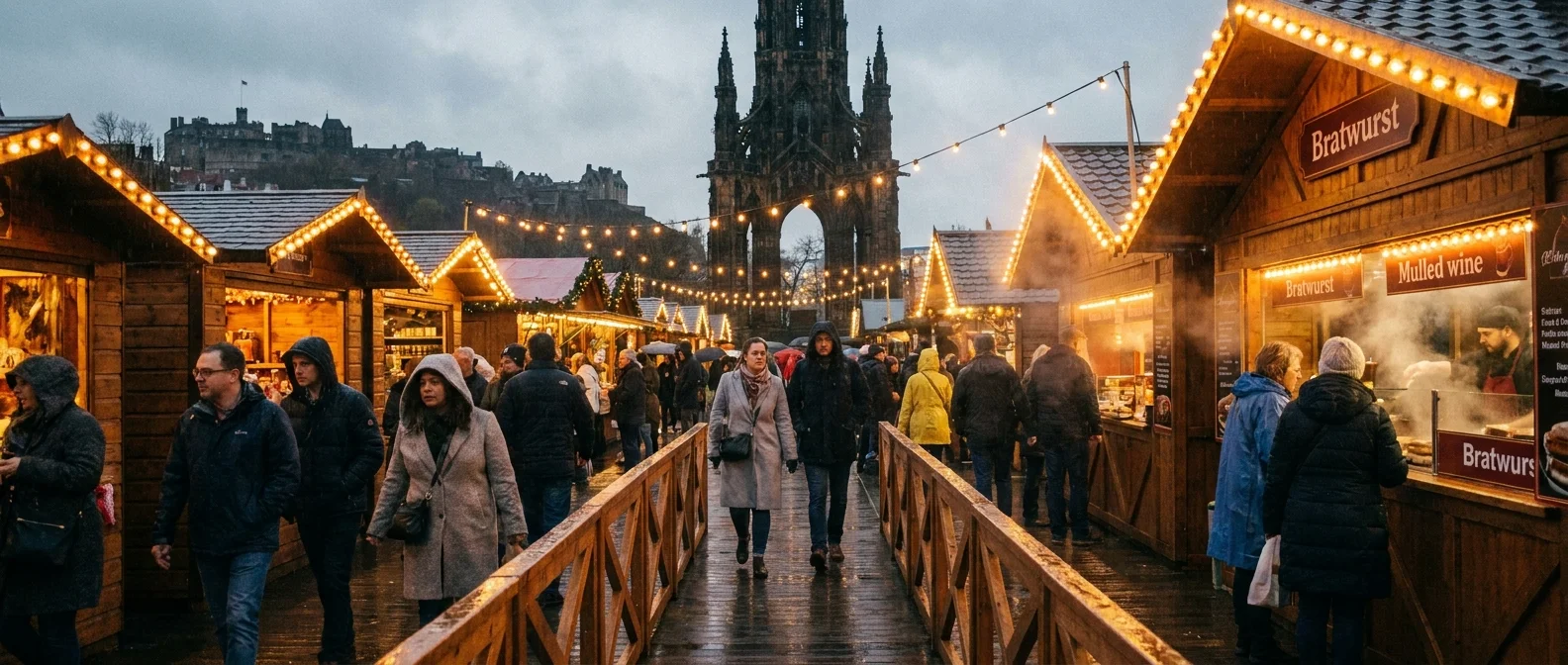
Table Of Contents
- Quick Answer
- UK Christmas market comparison: 2026 season
- The Multi-City Rail Strategy: Navigating the North
- Manchester & Birmingham: The Urban Powerhouses
- York & Edinburgh: The Historic North
- Timing, Weather, and Crowd Strategy
- Money, Etiquette, and Safety
- Complete Shopping Budget Breakdown - UK Christmas Shopping Trip
- Mistakes First-Timers Make
- Accommodation Guide - Where To Stay For Shopping
- Related FAQs
- Final
Experience the magic of a British winter by embarking on the “Multi-City Market Hop,” a strategic five-day journey through the UK’s most atmospheric regional hubs instead of limiting your shopping to a single department store. For travelers planning Christmas shopping UK trips in 2026, the challenge is no longer deciding which city to visit, but navigating the rail network efficiently to explore Manchester, York, and Edinburgh in one trip without falling victim to mid-December price peaks.
This guide provides a practical blueprint for enjoying Christmas shopping across the UK, with a focus on midweek travel, unique local artisan finds instead of mass-produced souvenirs, and smart transit strategies to beat the crowds. You’ll also discover how to organize your shopping route, make the most of festive markets, and find memorable gifts while keeping your holiday budget and travel schedule under control.
Quick Answer
- The best window: Tuesday to Thursday, between November 19 and December 10, 2026.
- Expected conditions: “Mizzle” (mist/drizzle) with temperatures between 1°C and 9°C; sunset as early as 15:50 in the north.
- The main friction: Saturday overcrowding in Bath and York can lead to 90-minute queues just to enter the market or train station.
- Booking note: Secure “Advance” rail tickets 8 to 12 weeks out and Saturday night hotels at least 3 months in advance to avoid 60% price spikes.
UK Christmas market comparison: 2026 season
| City | Primary market hub | Vibe | Best for | Signature item |
|---|---|---|---|---|
| Manchester | St Ann’s Square | Urban and expansive | Independent makers | Manchester Tart |
| Edinburgh | East Princes St Gardens | Dramatic and vertical | Festive atmosphere | Stornoway Black Pudding Roll |
| York | Parliament Street | Medieval and cozy | Traditional crafts | Yorkshire Pudding Wrap |
| Birmingham | Victoria Square | Authentic German | Food and socializing | Half-metre Bratwurst |
| Bath | Bath Abbey Streets | Heritage and boutique | Artisan glass and antiques | Bath Buns |
The Multi-City Rail Strategy: Navigating the North
The backbone of a multi-city trip is the East Coast Main Line. Use LNER for the York to Edinburgh train leg: it is a scenic 2.5-hour journey that often tracks the coastline north of Newcastle. Book “Advance” tickets exactly 12 weeks out via the LNER app to avoid the third-party booking fees found on the Trainline. These tickets are tied to a specific train time, but they offer the deepest discounts for travelers moving between hubs.
UK winter train travel requires a “Two Together Railcard” (£30) if you are traveling as a pair. This card slashes one-third off most fares and pays for itself in a single long-distance leg between Manchester and Edinburgh. Avoid “Anytime” tickets, which can cost three times the price of a fixed-time Advance fare. For example, a walk-up fare from London to Manchester can exceed £180, while an Advance ticket booked in October can be as low as £45.
Use sites like SplitMyFare to find cheaper segments on the same train. A Manchester to Edinburgh ticket is often cheaper if you “split” it at Preston or Carlisle. You stay in the same seat on the same train, but you hold two or three separate tickets for the constituent parts of the journey. This is a perfectly legal loophole that saves significant sums on the Avanti West Coast and TransPennine Express lines.
If you are traveling from Manchester to York, use the TransPennine Express service from Manchester Victoria or Manchester Piccadilly. The journey takes approximately 1 hour and 20 minutes. While trains are frequent, the 10:00 to 11:30 window on weekday mornings is the quietest. Avoid the 16:00 to 18:00 commuter rush, as these trains are often short-formed with only three or four carriages, leading to standing-room-only conditions.
Manchester & Birmingham: The Urban Powerhouses
Focus your energy on St Ann’s Square and Exchange Square in Manchester. While Piccadilly Gardens serves as the transit hub, it is prone to heavy crowds and opportunistic pickpocketing. The real charm lies in the Northern Quarter for independent boutiques. Walk 15 minutes from the main market stalls to find Tib Street and Affleck’s Palace. Look for the “Made in MCR” stalls for authentic local crafts, which are far superior to the mass-produced wooden ornaments found in the central hubs. The Manchester Christmas market guide for 2026 emphasizes the “hub and spoke” model: use the Metrolink tram to move between the ten different market sites, as walking the entire circuit can take several hours.
The Birmingham Frankfurt Christmas market is the largest of its kind outside Germany. Focus on Victoria Square for the most authentic atmosphere. The scent of roasted almonds and heavy bratwurst defines this space. To escape the noise, stay in the Jewellery Quarter. It is a 10-minute tram ride away on the West Midlands Metro but offers a significantly quieter, more upscale vibe for evening drinks. The Jewellery Quarter also provides a superior shopping experience for high-quality gifts, specifically bespoke silver and gold work that is made on-site in local workshops.
While Birmingham wins on scale and “German” authenticity with its half-metre bratwursts and pretzels, Manchester offers better variety for actual gift shopping. If you want unique jewelry and local art, Manchester’s Northern Quarter beats Birmingham’s central stalls. Birmingham is best for the social experience: standing with a mug of Glühwein in the shadow of the Town Hall. Manchester is better for the self-directed shopper who wants to bring home items that cannot be found on a standard high street.
For those seeking cheap hotels near the Manchester Christmas market, look toward the Salford Quays area. It is connected to the center by a 15-minute tram ride on the Blue Line. Hotels here, such as the Holiday Inn or Premier Inn, often cost £80 to £100 per night, even when city-center rates at the Midland or the Lowry climb toward £250 during the peak December weekends.
York & Edinburgh: The Historic North
The St Nicholas Fair in York expands from Parliament Street into the surrounding timber-framed alleys. For the best experience, stay near Micklegate for easy station access and a slightly lower price point than the hotels inside the medieval walls. The Shambles Market is the year-round core, but during December, it becomes the epicenter of the York vs Bath Christmas market debate for the title of “Most Picturesque.” York’s advantage is its compact nature: you can walk from the train station to the heart of the market in under 10 minutes.
Edinburgh’s vertical spectacle in East Princes Street Gardens is built into a valley between the New Town and the Old Town. It is visually dense but physically demanding due to steep ramps and narrow wooden walkways. For a local reprieve, head to Stockbridge. This neighborhood is a 15-minute walk from the center and offers a village feel with high-end independent gift shops and the Stockbridge Market on Sundays. George Street also hosts a more refined market with local Scottish producers, which is often less congested than the main gardens below the Scott Monument.
Signature northern eats are a highlight of these stops. In York, the Yorkshire Pudding Wrap is a mandatory £10 meal. It consists of a full roast dinner, including beef, gravy, and stuffing, rolled inside a giant, flattened Yorkshire pudding. It is designed to be eaten while walking, effectively replacing a sit-down dinner. In Edinburgh, seek out the Stornoway Black Pudding rolls. These use authentic Scottish black pudding from the Isle of Lewis and provide a rich, savory alternative to the standard market sausages.
When planning the York to Edinburgh train transition, aim for a mid-morning departure. This allows you to see the dramatic cliffs of the Northumberland coast in daylight. The sun sets before 16:00 in Edinburgh during December, so arriving by 13:00 gives you a few hours of natural light to navigate the steep hills of the Royal Mile before the evening market crowds peak.
Timing, Weather, and Crowd Strategy
The best weekday UK Christmas market breaks occur Tuesday through Thursday. Markets generally open at 10:00; the “after-work” crowd arrives at 16:30. Aim to finish your outdoor browsing by 13:00 to avoid the lunchtime rush and the heavy evening drinking crowds. By 18:00, the atmosphere in markets like Birmingham and Manchester shifts from “shopping” to “outdoor pub,” which can be overwhelming for those focused on buying gifts.
What to wear to UK Christmas markets is a matter of managing the “mizzle.” This is a pervasive British mix of mist and drizzle that doesn’t always show up on weather apps as “rain” but will soak through a standard wool coat in 30 minutes. Wear a waterproof outer shell over thermal base layers. Footwear is the most critical component of your kit. York and Edinburgh feature uneven medieval cobblestones that become slick and treacherous when wet. Lugged rubber soles are essential: avoid flat-soled fashion boots or sneakers with no tread.
With sunset between 15:50 in Edinburgh and 16:15 in Bath, your window for architectural photography is short. Plan to do your scenic walking and photography in the morning. Save the market stalls for the late afternoon when the festive lighting takes over. The markets often look better under artificial light, but the historic buildings of York and Edinburgh require the low winter sun to be fully appreciated.
If you must visit on a weekend, arrive at the market stalls the moment they open at 10:00. By 14:00 on a Saturday, the crowds in York’s Parliament Street can become so dense that movement between stalls is restricted to a slow shuffle. Use the period between 14:00 and 17:00 to retreat to a pre-booked afternoon tea or a cinema to wait out the peak congestion.
Money, Etiquette, and Safety
The UK is now roughly 95% cashless. Even the smallest stall in Manchester or Bath will prefer Contactless, Apple Pay, or Google Pay. Most vendors use mobile card readers like Square or Zettle. However, keep £20 in small notes for the occasional charity stall or in case card machines fail in high-interference crowd areas. Some markets, particularly in smaller towns, may still have a “minimum spend” for cards, though this is increasingly rare in the major cities.
British etiquette revolves around the queue. Do not hover at a stall or try to catch the vendor’s eye from the side. Wait for the person ahead to fully depart before stepping up to the counter. On station escalators, such as those at Birmingham New Street or Manchester Piccadilly, always stand on the right to allow commuters to pass on the left. Failing to do this is the quickest way to mark yourself as a tourist and frustrate local workers.
Pickpocketing is a reality in high-traffic zones like Piccadilly Gardens in Manchester and the area around New Street Station in Birmingham. Use a cross-body bag worn under your coat rather than over it. Avoid keeping your phone in your back pocket while navigating the dense crowds. If you are using your phone for navigation, step into a shop doorway or against a wall to check your map rather than stopping in the middle of a busy pedestrian flow.
When dining out, be aware that many UK restaurants now automatically add a “service charge” of 12.5% to the bill. This is optional, but most people pay it. If the service was poor, you can ask for it to be removed. You do not need to tip on top of this charge. In casual market stalls, tipping is not expected, though some may have a “change jar” for local charities.
Complete Shopping Budget Breakdown - UK Christmas Shopping Trip
Planning a shopping-focused Christmas trip requires understanding gift costs, travel, and accommodation.
Gift & Shopping Costs (Typical Price Ranges)
Artisan And Local Crafts
- Handmade ornaments/decorations: £8-25
- Local jewellery (silver, bespoke): £25-120+
- Art prints / small artwork: £20-80
- Candles and soaps (local makers): £8-18
- Scottish wool scarves/throws: £30-90
- Bath glass or ceramics: £15-60
- Christmas food gifts (chocolate, preserves): £6-15
Mass-Produced Market Items (For Comparison)
- Wooden ornaments: £3-8
- Mulled cider/wine mug + drink: £8-10
Gift Budget Example (Per Person, 7 Gifts)
- Budget (mostly small crafts): £80-140
- Mid-range (mix of artisan): £150-260
- Premium (bespoke jewellery, wool): £300-500+
Train Costs (Shopping Circuit)
Advance fares (booked 8-12 weeks out)
- Manchester to York: £15-35
- York to Edinburgh: £25-50
- Manchester to Edinburgh (split ticketing): £30-60
Anytime fares (AVOID)
- Manchester to York: £60-100
- York to Edinburgh: £100-150
Two Together Railcard: £30 one-time, 33% off most fares (weekdays after 9:30 AM)
Accommodation Costs (Per Night, Mid-Week)
- Salford Quays (Manchester): £80-100/night
- Manchester city centre: £110-250/night (weekend peak higher)
- Jewellery Quarter (Birmingham): £70-120/night
- York (Micklegate): £85-140/night
- Edinburgh (Stockbridge): £90-150/night
Saturday premium: 50-150% higher in York and Edinburgh.
Food & Drink Costs
- Yorkshire Pudding Wrap: £8-10
- Stornoway black pudding roll: £6-8
- Manchester Tart (bakery): £3-4
- Mulled wine/cider: £5-7 per cup
- Pub lunch: £9-14
- Restaurant dinner (reserved): £20-35
Daily food budget per person: £35-55
Local Transport
- Manchester Metrolink tram: £2-3 per trip
- Edinburgh Lothian Buses: £2-2.50 per trip
- Birmingham Metro: £2-3 per trip
Complete Trip Budget Examples (5 Days)
Solo shopper, budget
- Trains (Advance): £90-140
- Accommodation (4 nights, mid-week): £340-480
- Food: £180-270
- Gifts (budget): £80-140
- Local transport: £25-35
- Total: £715-1,065
Couple, mid-range
- Trains (with Two Together Railcard): £110-170
- Accommodation (4 nights): £560-760
- Food (2 people): £360-540
- Gifts (mid-range, shared): £150-260
- Local transport: £50-70
- Total: £1,230-1,800
Booking Timeline
| When | Trains | Hotels | Shopping Crowds |
|---|---|---|---|
| Sept | Cheapest Advance | Good availability | Low |
| Oct | Good | Filling | Low |
| Nov 19-Dec 10 | Moderate | Limited | Moderate (Tue-Thu) |
| Dec 11-22 | Expensive | Very limited | Peak |
Book by: September for trains and Saturday hotels, October for mid-week stays.
Money-Saving Tips
- Shop Tuesday to Thursday (lower crowds, better stall attention)
- Use SplitMyFare for cheaper rail segments
- Buy from Made in MCR and Yorkshire Artisan stalls (better quality than mass ornaments)
- Stay in Salford Quays or Micklegate for lower hotel rates
- Eat at pubs and chippies instead of market stalls
Mistakes First-Timers Make
The “Bath Day Trip” fallacy is the most common error. Many travelers try to visit Bath as a day trip from London on a Saturday. The consequence is severe: you may spend 90 minutes in a queue just to get back onto the train platform at the end of the day. The city becomes so congested that the local police often implement one-way walking systems. The fix is to visit Bath on a Monday or Tuesday, or stay overnight to enjoy the market after the last day-trip trains depart at 20:00.
Buying “Anytime” rail tickets is another expensive mistake. Buying tickets at the station on the day of travel can result in paying £150 for a journey that costs £45 if booked in advance. Always use the “Advance” ticket window 8 to 12 weeks out. If you miss that window, use a split-ticketing app even on the day of travel to shave 10% to 20% off the walk-up price.
Ignoring the “mizzle” is a recipe for a miserable trip. Many visitors assume a heavy wool coat is sufficient for the rain. However, wool becomes heavy and cold when soaked by persistent British mist. It also takes a long time to dry in a hotel room. Always carry a lightweight, packable waterproof layer to go over your festive attire. This keeps the wind out and ensures your base layers stay dry.
Finally, do not rely on “walk-in” dining in York or Edinburgh during the market season. Every restaurant within a mile of the markets will be fully booked by 17:00. If you haven’t reserved a table at least two weeks in advance, you will likely be relegated to eating market food standing up in the rain. Use apps like OpenTable or TheFork to secure your evening meals well before you arrive in the city.
Accommodation Guide - Where To Stay For Shopping
Your base should match what you plan to buy and when you plan to shop.
Manchester
Salford Quays (Best Value)
- Distance to St Ann’s Square: 15 min tram (Blue Line)
- Hotels: Holiday Inn, Premier Inn (£80-100/night)
- Best for: Budget shoppers, families
Northern Quarter (Best For Independent Shopping)
- Distance to Tib Street / Affleck’s Palace: 5-10 min walk
- Price: £90-150/night
- Best for: Artisan and boutique shoppers
City Centre (Deansgate / Midland)
- Distance to St Ann’s Square: 5 min walk
- Price: £150-250/night (peak weekends)
- Best for: Convenience
Birmingham
Jewellery Quarter (Best For Bespoke Jewellery)
- Distance to Victoria Square: 10 min tram
- Price: £70-120/night
- Best for: Silver and gold shoppers, quieter evenings
York
Micklegate (Best Value Near The Station)
- Distance to station: 5 min walk
- Distance to Shambles: 10 min walk
- Price: £85-140/night
Inside The Walls (City Centre)
- Distance to Parliament Street: 2-5 min walk
- Price: £120-200/night
- Best for: Walking to everything, higher cost
Edinburgh
Stockbridge (Village Shopping)
- Distance to East Princes Street Gardens: 15 min walk
- Distance to Stockbridge Market: 2 min walk (Sundays)
- Price: £90-150/night
New Town / George Street (Refined Shopping)
- Distance to George Street market: 2 min walk
- Price: £140-240/night
Comparison Table
| City | Area | Best For | Distance to Market | Price |
|---|---|---|---|---|
| Manchester | Salford Quays | Value | 15 min tram | £80-100 |
| Manchester | Northern Quarter | Artisan shopping | 5-10 min walk | £90-150 |
| Birmingham | Jewellery Quarter | Bespoke jewelry | 10 min tram | £70-120 |
| York | Micklegate | Value + station | 10 min walk | £85-140 |
| Edinburgh | Stockbridge | Village boutiques | 15 min walk | £90-150 |
Booking Strategy
Budget shopper: Salford Quays, Micklegate, Stockbridge. Tue-Thu only, book in September.
Mid-range: Northern Quarter, Jewellery Quarter, Stockbridge. Book by October.
Premium: City centres and New Town. Book 3 months ahead for weekends.
Related FAQs
Most major markets, including Manchester, Birmingham, and York, open between November 12 and November 18, 2026. They typically run until December 22 or 23. Note that almost everything, including markets and public transport, closes by 16:00 on Christmas Eve and remains closed on Christmas Day.
No, they are almost entirely cashless. While a few small charity stalls might prefer coins for their collection tins, 98% of vendors in Manchester and Edinburgh use contactless card readers. Carrying a backup £20 note is sufficient for a 3-day trip. If you need cash, use “Link” branded ATMs, which are usually free, rather than the small machines inside convenience stores which charge fees.
For sheer scale and the “German” experience, Birmingham is the leader. For “Instagrammable” medieval scenery, York is unmatched. For independent and artisan shopping, Manchester’s Northern Quarter or Bath’s Walcot Street are the superior choices. If you want a mix of everything, Manchester provides the best balance of variety and logistics.
Use the TransPennine Express or Northern Rail lines. The journey takes approximately 1 hour and 20 minutes. Trains depart multiple times per hour from Manchester Victoria or Manchester Piccadilly. Tickets are frequent, but booking a week ahead can still save you 40% over walk-up fares.
Focus on “dry warmth.” This means a waterproof shell, thermal leggings or long johns, and shoes with significant grip for wet stone. A power bank is essential as the cold and constant photo-taking will drain your phone. Do not forget a reusable bag, as many vendors charge for bags and paper ones often fail in the damp weather.
For Manchester and Birmingham, staying in the center is convenient but expensive. For Edinburgh and York, staying slightly further out in neighborhoods like Stockbridge or Micklegate offers better value and a quieter atmosphere while still being within a 15-minute walk of the stalls. In London, staying near Paddington or King’s Cross is best for catching early trains to these regional hubs.
Most independent market stalls do not offer refunds, so check the vendor’s policy before buying. Keep receipts and card statements. Major retailers in Manchester and Edinburgh usually accept returns within 28 days with proof of purchase.
Generally, no. Fixed prices are standard at UK markets, and haggling is considered rude. Buying two or more items from the same stall occasionally gets a small goodwill discount, but do not expect it.
Final
With your rail tickets secured and your “Two Together” railcard in hand, your next step is to map out your specific “Made in MCR” or “Yorkshire Artisan” must-haves to ensure your 2026 festive haul is as unique as the cities themselves. Plan for the mizzle, book your trains early, and avoid the Saturday rush to ensure a frictionless festive experience.

Experience the magic of a British winter by embarking on the “Multi-City Market Hop,” a strategic five-day journey through the UK’s most atmospheric regional hubs instead of limiting your shopping to a single department store. For travelers planning Christmas shopping UK trips in 2026, the challenge is no longer deciding which city to visit, but […]
As mist descends over cobblestone streets and the scent of mulled cider fills the air, the UK transforms into a festive wonderland. Travelers seeking the ultimate holiday atmosphere can make the most of the Golden Window, 14 days from late November to early December. During this time, many Christmas theater UK productions offer discounted preview […]

Escape the northern freeze with this definitive Guanacaste Costa Rica winter itinerary, designed to balance the sun-drenched Gold Coast with the rugged volcanic interior. From golden beaches and turquoise waters to lush forests and dramatic volcanic landscapes, Guanacaste Beach & Jungle offers the perfect combination of coastal relaxation and outdoor adventure. As the Verano (summer) […]