
Svalbard Polar Night Tourism: Polar Bear Safety, Gear & Dark Season Guide
Disclosure: To help support our website, some of the links below are affiliate links. This means that if you choose to make a purchase, we will earn a commission at no additional cost to you.
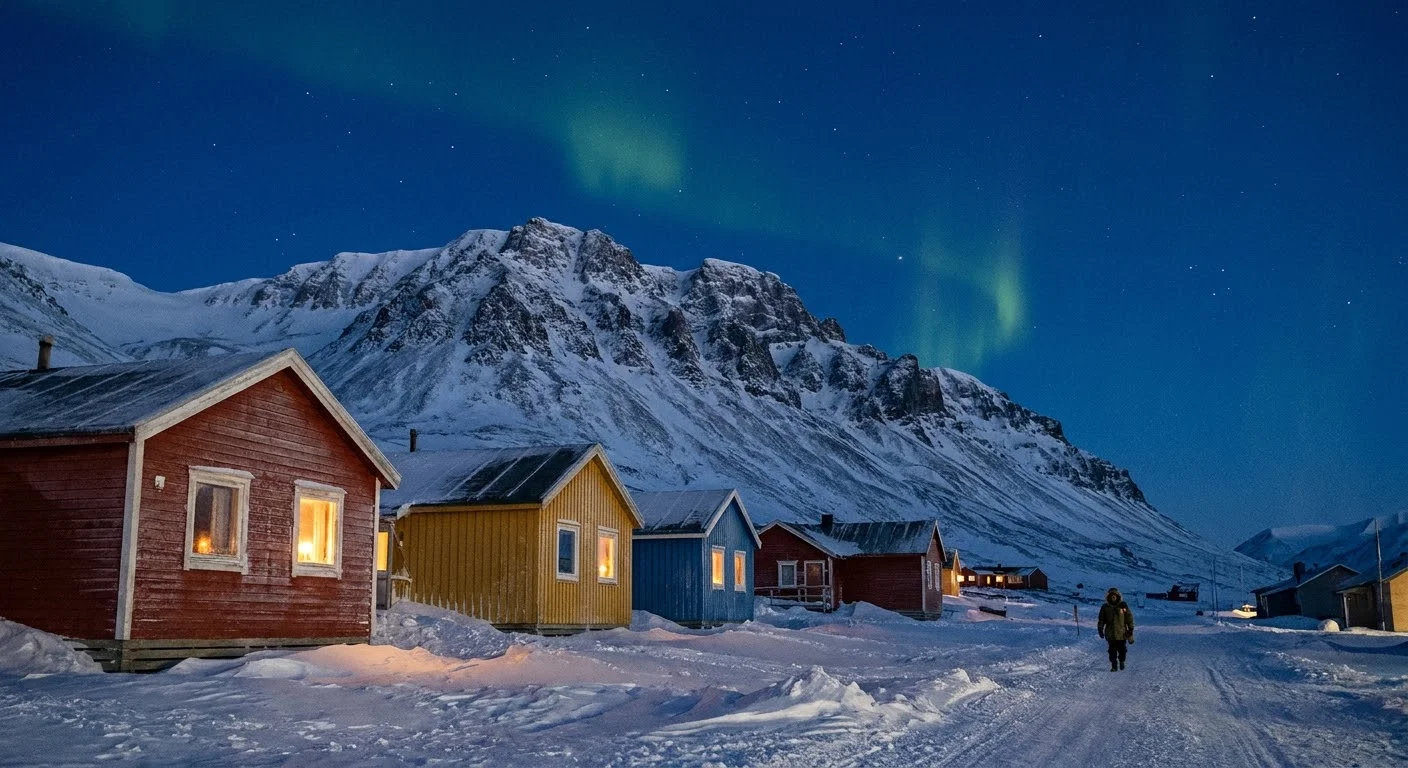
Table Of Contents
Imagine stepping off a plane at 78 degrees North, where the biting Arctic wind greets you and the sky remains an inky, star-studded canvas even at high noon. Svalbard polar night travel offers a surreal and captivating experience during the Polar Night, a period from mid-November to late January when the sun never rises above the horizon. This remote Arctic destination attracts adventure seekers with its profound sense of isolation and the raw, untamed beauty of the High Arctic. However, exploring this extreme environment requires careful preparation. Just as you rely on essential travel guides and packing tips for standard vacations, navigating Svalbard’s 24-hour darkness demands detailed logistical planning. From following strict polar bear safety protocols to choosing expedition-grade clothing, this guide covers everything you need to embrace the magic of the Arctic dark season.
Albuquerque Balloon Fiesta: Park & Ride Logistics, RV Tips & Camera Setup.
Understanding the Polar Night: Magic in the Darkness
To truly appreciate Svalbard in winter, one must understand the distinct phases of its darkness. During the true Polar Night—spanning from mid-November to late January—the sun remains at least six degrees below the horizon. The result is pitch-black darkness around the clock. While October and February offer a hauntingly beautiful “blue hour” twilight, the depths of winter plunge the archipelago into a perpetual midnight.
Far from being bleak, this 24-hour darkness is a profound draw for discerning travelers. The absence of sunlight creates the extraordinarily rare opportunity to witness daytime Aurora Borealis. You can literally watch the Northern Lights dance across the sky while eating your morning pastry. Furthermore, the extreme outdoor environment fosters a vibrant, deeply comforting indoor culture. The Norwegian concept of koselig (a profound sense of coziness and warmth) is palpable in Longyearbyen. Locals and travelers alike gather in candlelit pubs and world-class restaurants, shedding their heavy parkas to share stories of the day’s icy expeditions.
Destination Logistics: Navigating to the Top of the World
Reaching the world’s northernmost permanent settlement is an adventure in itself, but modern aviation makes it surprisingly accessible. Daily flights operate from mainland Norway—specifically Oslo (OSL) and Tromsø (TOS)—flying directly into Svalbard Airport, Longyearbyen (LYR), via Scandinavian Airlines (SAS) and Norwegian Air.
However, there is a crucial transit detail that catches many travelers off guard: Svalbard is located outside the Schengen Area. Even if you are flying from mainland Norway, you must pass through passport control in Oslo or Tromsø before boarding your flight. A valid passport is an absolute legal mandate for all visitors, regardless of nationality.
Upon arrival, Longyearbyen serves as your basecamp. While the settlement is highly walkable, extreme weather can make a ten-minute stroll to the grocery store feel like a polar expedition. An airport shuttle bus reliably aligns with all arriving and departing flights, dropping guests off at major hotels. Taxis are available but are limited in number, so booking is highly recommended for dinner reservations or early morning departures.
House of the Dragon Filming Locations (Spain & Wales): 7-Day Road Trip Itinerary.
Polar Bear Safety: The Absolute Rules of Svalbard
The allure of Svalbard is inextricably linked to its apex predator. There are roughly 3,000 polar bears in the Svalbard archipelago, meaning they officially outnumber the human population. These are actively hunting marine mammals, and the darkness of winter does not slow them down.
Because of this ever-present threat, the Governor of Svalbard enforces strict safety laws. Longyearbyen has a designated “safe zone” (marked by iconic polar bear warning signs at the edge of town). Anyone traveling outside these boundaries is legally required to carry appropriate means of frightening and chasing off polar bears—specifically, a flare gun and a high-powered rifle (minimum .308 caliber).
As a tourist, your protocol is simple: never leave the settlement limits without a certified, armed guide. While it is technically possible to rent a rifle, it requires extensive firearms experience and a pre-approved permit from the Governor. It is infinitely safer and more responsible to book organized tours with local experts who are rigorously trained in polar bear protection and Arctic survival.
Within the town limits, you will notice a quirky but vital local etiquette: residents never lock their car doors, and many leave their house doors unlocked. This is a historic, community-wide rule designed to provide immediate shelter to anyone who might find themselves fleeing a wandering polar bear in town.
The Extreme Arctic Packing Guide
Surviving temperatures that average between -15°C and -30°C (with wind chills plummeting to -40°C) requires a scientific approach to your wardrobe. Unlike the lightweight, transitional layers you might utilize in a Kyoto autumn packing guide, dressing for Svalbard’s Polar Night requires expedition-grade thermal engineering. Cotton is your worst enemy in the Arctic; if you sweat, cotton freezes.
Your foundation must be a high-quality base layer made of 100% heavyweight Merino wool (both top and bottom). Over this, add a mid-layer consisting of a thick fleece or a packable down sweater to trap body heat. Finally, your outer layer must be an expedition-grade, windproof, and waterproof Arctic parka (brands like Fjällräven, Canada Goose, or Helly Hansen are standard issue here).
Footwear is equally critical. You need heavily insulated winter boots rated for at least -40°C (such as Baffin or Sorel). Because the streets of Longyearbyen frequently turn into sheets of black ice, slip-on ice cleats or micro-spikes are non-negotiable for walking around town.
To protect your extremities from frostbite, pack a windproof balaclava, ski goggles (essential for blocking freezing winds during snowmobile or dog sledding trips), moisture-wicking liner gloves, and heavy extreme-cold mittens. Finally, a high-lumen headlamp is mandatory. You will wear it constantly just to navigate the town’s snow-covered streets.
Cultural Note: When packing your indoor clothing, remember that Longyearbyen observes a strict “no shoes indoors” policy. Originating from the town’s coal mining days to prevent black dust from ruining floors, you will be expected to remove your boots when entering hotels, museums, and even fine-dining restaurants. Pack a pair of thick wool socks or lightweight indoor slippers.
Arctic Layering & Essential Gear Breakdown
| Gear Category | Essential Items | Purpose & Arctic Function | Recommended Specs |
|---|---|---|---|
| Base Layer | Long underwear, long-sleeve top | Moisture-wicking and core heat retention. | 100% Heavyweight Merino Wool (No cotton). |
| Mid Layer | Fleece jacket, down sweater | Traps body heat before it escapes. | Polartec fleece or 800-fill down. |
| Outer Shell | Expedition Parka, Snow Pants | Blocks extreme wind chill and repels snow. | Windproof, waterproof, thigh-length parka. |
| Footwear | Insulated boots, Ice cleats | Prevents frostbite and slipping on black ice. | Rated to -40°C; aggressive rubber tread. |
| Accessories | Balaclava, Ski Goggles, Mittens | Protects exposed skin from instant frostnip. | Windstopper fabric; mittens (warmer than gloves). |
| Hardware | High-lumen headlamp | Essential for 24/7 darkness navigation. | Minimum 300 lumens, lithium batteries (resist cold). |
Gladiator 2 Filming Locations Malta: Fort Ricasoli & Mdina Day Trip Logistics.
Curated Dark Season Itinerary: What to Do in the Pitch Black
It is a common misconception that the darkness shuts down outdoor exploration. In reality, the Polar Night transforms traditional excursions into otherworldly adventures.
Dog Sledding in the Dark: Imagine mushing a team of eager Alaskan Huskies through the sweeping Bolterdalen valley. With no sun to guide you, your only illumination comes from your headlamp, the reflection of the snow, and, if you are lucky, the ethereal green glow of the Aurora Borealis. The primeval silence of the Arctic, broken only by the panting of the dogs and the scraping of the sled runners, is an experience that borders on the spiritual.
Glacial Ice Caving: Because the glaciers are frozen solid in winter, guides can lead you deep into the ancient meltwater channels of the Longyear Glacier. Equipped with crampons and helmets, you will descend into a subterranean world of twisting ice corridors, glittering frost crystals, and thousand-year-old trapped air bubbles.
Wilderness Evenings at Camp Barentz: For a less physically demanding but equally immersive evening, venture to Camp Barentz, located in the Advent Valley just outside town. Here, guests gather in a remote, rustic wooden cabin around a roaring fire. You will be served traditional reindeer bidos (a hearty Arctic stew) while armed guides deliver fascinating lectures on polar bear biology and local history, all while keeping watch for the Northern Lights outside.
The Culinary Scene: Despite its remote location, Longyearbyen boasts a surprisingly sophisticated culinary landscape. After a freezing day in the wilderness, book a table at Huset, a legendary restaurant offering an exquisite Arctic tasting menu featuring local ingredients like Svalbard reindeer, ptarmigan, and seal, paired with selections from one of Europe’s largest wine cellars. Alternatively, Funken Lodge offers panoramic views of the darkened town alongside world-class French-inspired cuisine.
Kandy Esala Perahera Sri Lanka: Best Viewing Seats, Hotel Timing & Temple Rules.
Related FAQs
Yes. Because the sun remains well below the horizon from mid-November to late January, the sky is dark enough to view the Aurora Borealis at noon. Svalbard is one of the only inhabited places on Earth where daytime auroras are visible.
Svalbard itself is a visa-free zone, and anyone can live or work there indefinitely regardless of citizenship. However, because you must transit through mainland Norway to get there, you must meet the Schengen Area visa requirements for your nationality.
Yes, it is perfectly safe to walk within the designated settlement boundaries at any hour. Polar bears rarely enter the town center, and local authorities monitor the perimeter. However, you must wear a headlamp to be seen by snowmobiles and wear ice cleats to avoid slipping.
Technically, yes, but it is highly discouraged for tourists. You must apply for a permit from the Governor of Svalbard months in advance and prove extensive firearms proficiency. For safety and peace of mind, tourists should always rely on certified, armed professional guides.
Embracing the Inky Void
Visiting Svalbard during the Polar Night is not a standard winter vacation; it is a transformative journey to the edge of the habitable world. It demands respect for the extreme environment, a willingness to surrender to the elements, and a deep appreciation for the primeval forces of nature. By packing meticulously, respecting the wildlife protocols, and booking your expert guides well in advance, you will unlock a side of the Arctic that few travelers ever get to see. Step into the darkness, look up at the dancing skies, and let the profound silence of the High Arctic leave its indelible mark on your soul.

Imagine stepping off a plane at 78 degrees North, where the biting Arctic wind greets you and the sky remains an inky, star-studded canvas even at high noon. Svalbard polar night travel offers a surreal and captivating experience during the Polar Night, a period from mid-November to late January when the sun never rises above […]

The Gladiator 2 filming locations Malta guide takes you behind the scenes of Ridley Scott’s epic sequel, showcasing the island’s sun-baked, honey-colored limestone, dramatic fortifications, and timeless architecture. When Scott needed a setting grand enough to recreate the glory and brutality of ancient Rome, Malta offered the perfect cinematic backdrop. Its historic streets and impressive […]
The Emily in Paris walking tour offers fans the perfect way to explore the iconic locations featured in Emily in Paris Season 5, from the charming cobblestone streets of Paris to the stylish boulevards of Rome. With Season 5 promising a tantalizing split between these two European cities, fans are already packing their vintage Chanel […]