
Harbin Ice and Snow Festival 2027: Ultimate Outfit & Extreme Cold Survival Guide
Disclosure: To help support our website, some of the links below are affiliate links. This means that if you choose to make a purchase, we will earn a commission at no additional cost to you.
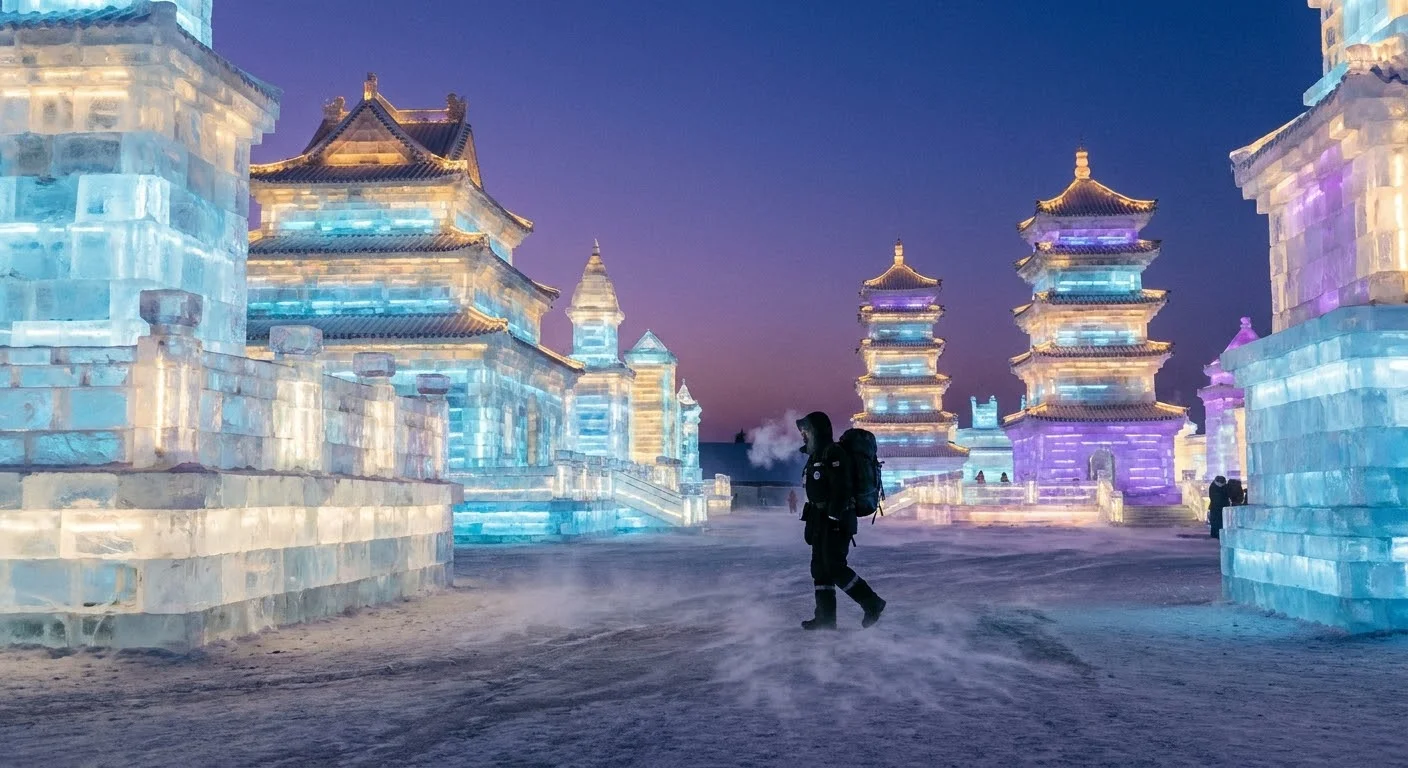
Table Of Contents
Harbin Ice Festival offers travelers an unforgettable opportunity to explore one of the world’s most spectacular winter celebrations. Stepping into the Harbin Ice and Snow Festival feels like crossing the threshold into a neon-lit, crystalline dreamscape. Towering ice palaces glow vibrantly against the pitch-black Manchurian sky, while horse-drawn carriages glide past life-sized snow sculptures. Yet, the sheer scale of this winter wonderland comes with the brutal reality of Siberian winds sweeping through Heilongjiang province. For travelers who regularly seek out premium cultural travel insights and event guides, attending the 2027 festival offers the ultimate winter adventure, filled with extraordinary sights, cultural experiences, and unforgettable attractions. However, to enjoy this bucket-list experience comfortably, you must master the art of extreme-cold preparation. When temperatures plunge to -30°C, a standard winter coat simply won’t provide enough protection. You need thermal layers, insulated footwear, reliable accessories, and a practical plan for spending extended periods outdoors. This guide covers the essential gear, logistical strategies, and insider knowledge you need to stay warm, navigate the festival grounds, and make the most of your visit to China’s magnificent ice city.
Geothermal Spa Etiquette in Iceland: Blue Lagoon vs. Sky Lagoon Packing & Booking Guide.
Understanding the Deep Freeze: Harbin’s Climate in Jan/Feb 2027
Set to officially open on January 5, 2027, the festival operates during the absolute depths of the East Asian winter. Harbin sits just a few hundred miles from the Russian border, subjecting it to a punishing, dry Siberian weather system. Average daytime temperatures hover between -15°C and -25°C (5°F to -13°F), while nightfall routinely brings plunges down to -30°C (-22°F). When the wind howls across the frozen expanse of the Songhua River, the wind chill can make it feel closer to a staggering -40°C.
This is not the damp, bone-chilling cold of coastal cities; it is a sharp, dry freeze that immediately attacks exposed skin. Spending four to six hours outdoors exploring the massive ice parks requires a deliberate, almost expedition-level approach to your wardrobe. Respecting the climate is the first step toward an unforgettable experience, ensuring that your memories are of breathtaking ice architecture rather than numb toes and shivering shoulders.
The Ultimate Extreme Cold Outfit Guide
Surviving Harbin is not about wearing the single thickest coat you own; it is about building strategic, moisture-wicking layers that trap body heat while creating an impenetrable fortress against the wind.
The 4-Layer Torso System
1. The Base Layer (Moisture Management): Start with a 250g+ Merino wool top and bottom. Avoid cotton entirely; if you sweat while walking, cotton retains the moisture and freezes against your skin. Merino wool wicks sweat while retaining heat.
2. Mid-Layer 1 (Insulation): Add a heavyweight fleece or a thick cashmere sweater. This layer creates the first pocket of trapped warm air.
3. Mid-Layer 2 (Core Heat): Wear a highly packable down jacket or vest (800-fill power) over your fleece. This acts as the primary furnace for your core.
4. The Outer Shell (Element Protection): You need an expedition-grade, windproof, and waterproof parka (such as a Canada Goose or The North Face McMurdo) that extends down past your hips to cover your thighs. For your lower half, insulated, windproof ski pants are absolutely mandatory.
Protecting Your Extremities
Frostbite targets the extremities first. For footwear, invest in winter boots rated for -40°C (brands like Sorel or Baffin are ideal). They must have thick rubber soles to insulate your feet from the frozen ground. Size up your boots by one half-size to comfortably accommodate two pairs of socks: a thin silk liner sock and a thick heavyweight wool sock.
For your hands, wear touchscreen-compatible liner gloves underneath heavy-duty, insulated mittens. Mittens are vastly superior to fingered gloves in extreme cold because they keep your fingers together, allowing them to share body heat. Finally, protect your head and face with a fleece-lined balaclava, a trapper hat with ear flaps, and polarized ski goggles to shield your eyes from the freezing wind and blinding snow glare.
The Secret Weapon: Chemical Warmers
Even with the best gear, you will want supplemental heat. Purchase adhesive chemical body warmers and stick them to your base layer on your lower back and chest. Slip specialized half-moon toe warmers into the top of your boots (above the toes, not under them, to avoid blistering).
The 4-Layer Extreme Cold Packing Matrix
| Layer Type | Primary Function | Recommended Material | What to Strictly Avoid |
|---|---|---|---|
| Base Layer | Moisture wicking, skin-level heat | 250g+ Merino Wool, Silk | Cotton (freezes when sweaty) |
| Mid-Layers | Trapping body heat, core insulation | Heavy Fleece, Cashmere, Down | Thin synthetics, denim |
| Outer Shell | Windproofing, element blocking | Gore-Tex, Expedition Parkas | Cropped jackets, porous wool |
| Extremities | Preventing frostbite | Thick rubber-soled boots, Mittens | Fingered gloves, fashion boots |
Oman Winter Road Trip Logistics: 4×4 Rental, Camping Gear & Oasis Itinerary.
Tech Survival: Keeping Your Electronics Alive
At -30°C, lithium-ion batteries experience catastrophic voltage drops. A fully charged smartphone can die in less than three minutes if exposed to the open air. To keep your devices alive to capture the illuminated ice castles, keep your phone in an interior chest pocket, as close to your body heat as possible.
Attach an adhesive chemical hand warmer directly to the back of your phone case. Bring at least two high-capacity power banks (20,000mAh), keep them inside your coat, and run a long charging cable to your phone while you are actively taking photos.
For photographers bringing professional gear, the transition from the freezing outdoors to a heated hotel lobby will cause damaging internal condensation inside your camera lenses. The solution is simple: place your camera and lenses in an airtight Ziploc bag while you are still outside. Bring the sealed bag indoors and allow the equipment to slowly acclimatize to room temperature over a few hours before opening it.
Festival Logistics & Where to Base Yourself
Harbin is a sprawling metropolis, and choosing the right neighborhood is critical for minimizing your time spent waiting in freezing transit. The historic Daoli District, centered around the cobblestone Zhongyang Pedestrian Street, is the premier base for first-time visitors. Here, you are surrounded by 20th-century Russian-style architecture, hearty northeastern Chinese restaurants, and Zhaolin Park.
Alternatively, the Songbei District sits across the frozen river, much closer to the main Ice and Snow World venue. However, it is largely commercial and lacks the historical charm and walkable dining options of Daoli. Much like figuring out where to stay for the Sapporo Snow Festival, securing the right accommodation in Harbin requires booking months in advance to ensure proximity to the main transit hubs and cultural sites.
When planning your arrival, skip the inevitable winter flight delays. Instead, fly into Beijing and take the high-speed bullet train from Beijing Chaoyang Station directly to Harbin West Railway Station. The journey takes roughly five hours in a climate-controlled cabin, offering beautiful views of the snow-covered Manchurian plains. Once in the city, rely on the highly efficient Harbin Metro. Line 2 connects the city center directly to Ice and Snow World, saving you from waiting for taxis in the bitter cold.
Must-See Venues & Route Itinerary
The festival is not a single location, but rather a city-wide celebration divided into three distinct primary venues. Pacing yourself is vital to avoid cold exhaustion.
- Harbin Ice and Snow World: This is the crown jewel of the festival. Plan to arrive around 3:00 PM. This strategic timing allows you to marvel at the massive ice architecture in the daylight, watch the sunset over the frozen city, and then experience the breathtaking moment when millions of neon LEDs illuminate the ice blocks from within.
- Harbin Ice and Snow World: Best visited in the late morning. Unlike the translucent ice blocks of the main park, Sun Island features colossal, pristine white snow sculptures. These intricate works of art require natural daylight to truly appreciate their scale and detail.
- Zhaolin Park & Zhongyang Street: Perfect for an evening stroll. Zhaolin Park hosts the traditional ice lantern art fair, offering a quieter, more historical vibe than the massive neon parks. Afterward, walk down Zhongyang Street and partake in a beloved local tradition: eating a famous Madieer (Modern) ice pop while bundled up in the cold.
Melbourne Australian Open Logistics: Tram Access, Night Session Outfits & Ticket Hacks.
Related FAQs
Yes, most international travelers require a standard Chinese tourist visa (L Visa) obtained prior to arrival. However, China has recently expanded its visa-free entry and 144-hour transit visa exemption programs for several nationalities. Check with your local Chinese consulate for the most up-to-date 2027 regulations.
Absolutely. Harbin caters to winter tourists, and you will find countless shops selling heavy coats, boots, and hats. However, the quality of insulation can vary wildly. It is highly recommended to bring your own high-quality base layers, mid-layers, and properly rated boots, relying on local shops only for supplemental items like extra hats or chemical warmers.
China is an almost entirely cashless society, but foreign credit cards are rarely accepted at physical terminals. Before arriving, download Alipay or WeChat, set up an account, and link your foreign credit card. You will use these apps to scan QR codes for everything from festival tickets to hot tea.
Yes. By January, the ice on the Songhua River is several feet thick and incredibly stable. The river essentially becomes a massive winter playground, hosting ice skating, snowmobiling, dog sledding, and winter swimming competitions.
Conclusion
The Harbin Ice and Snow Festival is a profound testament to human creativity in the face of an unforgiving climate. It is a place where the harshness of winter is not just endured, but celebrated on a monumental scale. By respecting the extreme cold and investing in the right preparation, the biting wind becomes a mere afterthought. Safely cocooned in your layers, you are free to lose yourself in a fleeting, frozen metropolis, a glittering world of ice that will melt away with the spring, leaving only memories of one of the most extraordinary winter journeys on earth.

Harbin Ice Festival offers travelers an unforgettable opportunity to explore one of the world’s most spectacular winter celebrations. Stepping into the Harbin Ice and Snow Festival feels like crossing the threshold into a neon-lit, crystalline dreamscape. Towering ice palaces glow vibrantly against the pitch-black Manchurian sky, while horse-drawn carriages glide past life-sized snow sculptures. Yet, […]

Australian Open travel and spectator planning involves more than simply booking tickets and reserving a hotel. The Australian Open is far more than the first Grand Slam of the calendar year; it is a two-week cultural festival that transforms Melbourne into a global sporting destination. Every January, the city becomes an energetic hub of elite […]

Tour de France spectator planning requires far more than simply showing up on race day. There is no sporting arena in the world quite like the high mountains of the Tour de France. Every July, the jagged peaks of the French Alps and the steep, unforgiving passes of the Pyrenees transform into a sprawling, multi-day […]